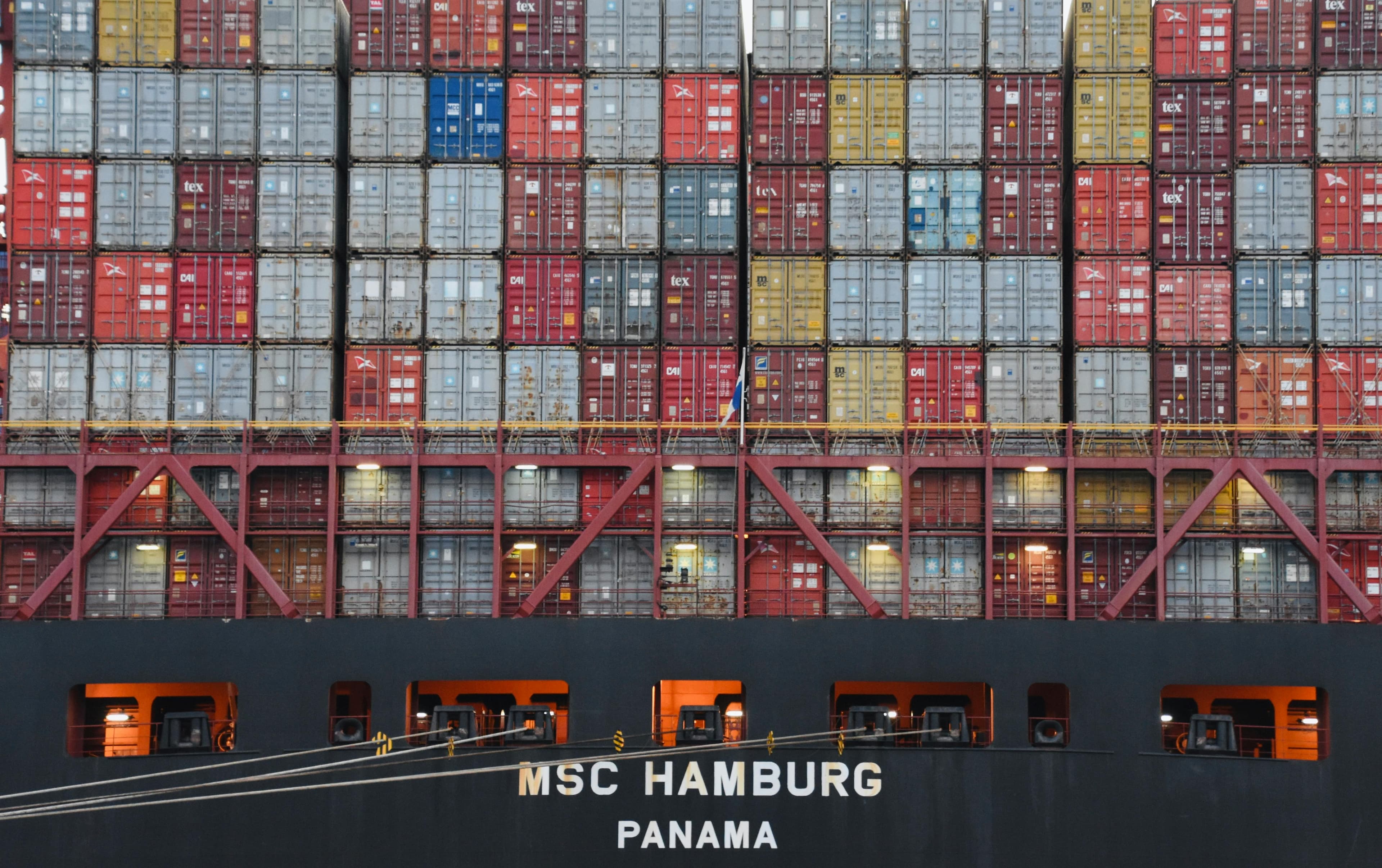
FCL or LCL for your India import? The break-even is 15 CBM and the cost gap is real. Here is a practical guide to making the right call for your shipment size and route.
FCL vs LCL: Which Shipping Method Is Right for Your India Import?
Every importer sourcing from India faces the same question at some point: do I book an entire container, or do I share space with other shippers? It sounds like a simple logistics decision. In practice it touches your landed cost, your transit time, your cargo security, your documentation complexity, and how much risk you carry if something goes wrong at the port.
The choice between FCL shipping (Full Container Load) and LCL shipping (Less than Container Load) is one of the most consequential decisions in international procurement - and one of the most consistently misunderstood. Most importers default to whichever method their first freight forwarder suggested and never revisit the question as their volumes change. That approach costs money.
This guide gives you a clear framework for making the right call, with specific numbers for India import shipping costs in 2025.
What FCL and LCL Actually Mean
FCL means you book an entire container - a 20-foot or 40-foot standard unit - exclusively for your cargo. Nobody else's goods travel in that container. It is sealed at the Indian port, loaded onto the vessel, and opened only at your destination port. Your goods are the only items inside from origin to delivery.
LCL shipping from India works differently. Your cargo is brought to a Container Freight Station (CFS) near the Indian port, where a freight forwarder consolidates it with shipments from multiple other exporters into a single container. You pay only for the cubic meters or weight your cargo occupies - whichever is higher. At the destination, the container goes to a deconsolidation warehouse where it is broken back down and your shipment is separated out for customs clearance and final delivery. Both methods use the same vessels and the same ocean routes. What differs is who else shares the journey with your cargo, how many times it is handled, and how the cost is calculated.
The Cost Structure ~ Where the Numbers Actually Land
Understanding how each method is priced is essential before you can make a rational
comparison.FCL pricing is straightforward. You pay a fixed rate per container - regardless of whether the container is full or half empty. A 20-foot container from India to the US typically ranges from $2,000 to $3,500, while a 40-foot container runs between $3,500 and $6,000 in 2025, depending on route and demand. On top of base freight, you pay origin charges (container stuffing, inland transport to port), destination charges (port handling, customs clearance), and any applicable surcharges - Peak Season Surcharge, Bunker Adjustment Factor, and currently on affected lanes, War Risk and Emergency Conflict Surcharges. LCL pricing is calculated on a per CBM (cubic meter) basis, with the chargeable weight being the higher of actual volume or actual weight. LCL rates from India start around $50 to $80 per CBM, but the base rate is not your full cost. LCL carries consolidation and deconsolidation fees at both ends, CFS handling charges, documentation fees per bill of lading, and the same carrier surcharges as FCL. During peak season, LCL rates increase by 25%, making early booking critical.
The key number every importer needs to understand: the FCL vs LCL break-even point sits at approximately 15 CBM. Below 15 CBM, LCL is typically cheaper due to flexibility - above 15 CBM, FCL becomes more economical. To make this concrete: a 12 CBM shipment costs roughly $1,800 to $3,000 via LCL versus $400 to $550 via FCL for the container portion alone - and at 20 CBM, the LCL cost rises to $3,000 to $5,000 while the FCL container cost stays at $400 to $550.
Once you are above 15 CBM, the per-unit economics of FCL are almost always better. The question is whether your volumes are consistent enough to justify committing to full containers.
Transit Time ~ The Gap That Surprises Importers
Transit time differences between FCL and LCL are real and should factor into any honest cost comparison.
FCL transit times from India are direct: Mumbai to Los Angeles takes 15 to 20 days, Mumbai to New York runs 25 to 35 days via Panama Canal, and Gulf Coast ports are around 25 to 30 days. Your container moves from the Indian port to your destination port without intermediate stops for consolidation or deconsolidation.
LCL adds time at both ends. Your cargo must arrive at the CFS warehouse before the consolidation cutoff - typically 2 to 3 days before vessel departure. At the destination, the container goes to a deconsolidation facility before your goods can be cleared through customs and released. LCL shipments typically take an additional 5 to 7 days compared to FCL due to consolidation and deconsolidation processes at both ends.
For food importers managing stock replenishment cycles, festival season supply windows, or retailer delivery commitments, those extra days matter. A shipment that misses a delivery window because LCL deconsolidation added a week to transit time is a supply chain failure regardless of how much money was saved on the freight rate.
Cargo Security and Damage Risk
This is the dimension of the FCL vs LCL decision that food importers consistently underweight.
In FCL, your container is sealed at the Indian origin facility and opened only at your destination. Nobody else handles your cargo in between. The number of touchpoints between packing and delivery is minimal - and every touchpoint is a potential damage or contamination event for food products.
In LCL, your cargo is handled at the origin CFS during consolidation, travels in a shared container with other shippers' goods of unknown nature, and is handled again at the destination deconsolidation warehouse. For ambient dry goods like spices, lentils, or basmati rice in sealed commercial packaging, this risk is manageable. For products with contamination sensitivity, strong aroma that could be absorbed by adjacent cargo, or packaging that requires protection from compression, the shared-container environment introduces risk that FCL eliminates.
There is also the contamination documentation risk specific to food imports. If another shipper's cargo in your LCL container is flagged by customs or border inspection authorities, your shipment can be held while the issue is resolved - even if your goods are fully compliant. In FCL, your container's fate is determined by your cargo alone.
Documentation Complexity
FCL documentation is clean: one bill of lading, one shipper, one set of customs declarations, one certificate of origin and phytosanitary certificate linked to one shipment. Your freight forwarder manages one transaction.
LCL adds a layer of complexity. Your goods travel under a house bill of lading issued by the consolidating freight forwarder, which references a master bill of lading for the full container. At destination, the deconsolidation agent issues a delivery order for your specific cargo. For food imports with multiple certificates - FSSAI certification, Halal certificate, phytosanitary certificate, certificate of analysis - ensuring all documentation is correctly linked to your specific house bill and released cleanly at destination requires active management.
For first-time importers or those in markets with strict border inspection regimes - Australia's DAFF, the US FDA, the EU's IFIS - FCL's cleaner documentation trail is a meaningful operational advantage. The additional administrative complexity of LCL is manageable, but it is real.
When LCL Makes Sense
LCL is not a compromise option. For the right volumes and situations, it is genuinely the better choice.
If you are importing less than 10 to 12 CBM on a given lane, LCL is almost always cheaper on a total landed cost basis. If you are testing a new product or a new market - ordering a trial volume of a new spice variety to assess demand before committing to full container quantities - LCL gives you commercial flexibility that FCL cannot. If your business has seasonal volume peaks that don't justify a full container outside peak periods, LCL allows you to ship consistently without waiting to accumulate full container loads.
LCL consolidation from India also works well for importers who are building a portfolio of products from different Indian suppliers. A small food importer who sources basmati rice, turmeric, cumin, and lentils in 2 to 3 CBM quantities each from different suppliers can consolidate these into a single LCL shipment rather than managing four separate FCL containers or waiting until one supplier's volume justifies a full container.
When FCL Is the Clear Choice
Once your volumes consistently exceed 15 CBM per shipment, the case for FCL is strong and becomes stronger as volume grows. Over 70% of India's containerized trade uses FCL in 2025, driven by manufacturing growth and the premium placed on predictability in volatile freight markets.
For food importers supplying retail chains, food manufacturers, or distribution centers, FCL's consistency advantages are hard to overstate. A 20-foot container of basmati rice or cumin that arrives on schedule, clears customs without complication, and delivers to your warehouse on the agreed date is worth more than a marginally cheaper LCL shipment that adds unpredictability to your planning cycle.
FCL container rates from India are also more stable than LCL rates. LCL pricing is subject to more volatility from consolidation demand and carrier allocation - in tight markets, finding consolidation space can be harder than booking an FCL slot, and the surcharge environment in 2025 and 2026 has hit LCL per-CBM economics harder than FCL per-container rates.
If you are sourcing from a single Indian exporter at volumes above 15 CBM - which is the standard for any importer working at distribution scale with a primary product category - FCL is simply the better structure.
A Practical Decision Framework
Ask yourself three questions before booking your next shipment from India:
What is my CBM? If you don't know the cubic meter volume of your shipment, calculate it before engaging a freight forwarder. Length times width times height in meters for each SKU, multiplied by the number of cartons or bags. If your total is under 12 CBM, start with LCL quotes. If it is above 15 CBM, get FCL quotes. Between 12 and 15 CBM, get both and compare total landed cost - not just the freight line.
How time-sensitive is this shipment? If you have a fixed delivery window - a retailer's planogram date, a festival season stock requirement, a manufacturing input schedule - FCL's more predictable transit and simpler port clearance process reduces the risk of a costly delay.
How often do I ship this lane? If you ship the same India-to-destination lane more than once a month, consolidating into monthly FCL shipments almost always produces better economics than multiple LCL bookings. The per-unit savings compound across the year.
Why This Matters for India Sourcing Specifically
India's major export ports - Nhava Sheva (JNPT), Mundra, Chennai, and Cochin - all have strong FCL carrier frequency on primary trade lanes. Mundra and Nhava Sheva are India's most competitive ports for FCL shipping due to high carrier frequency and infrastructure efficiency. For buyers on the India-to-Europe, India-to-US, or India-to-Middle East lanes, FCL capacity is well-supplied and carrier competition keeps rates competitive.
At [Bayharbor Exports](https://www.bayharborexports.com/contact-us), we work with experienced freight forwarders across all our key markets and are happy to guide first-time India importers through the FCL vs LCL decision for their specific product and volume profile. We handle export documentation, phytosanitary certification, quality testing, and loading supervision on the India side - so your container leaves correctly regardless of which shipping method you choose. Our blog on which shipping line to use when importing from India covers the carrier selection side of the equation once you've decided on FCL or LCL.
Frequently Asked Questions
What is the break-even point between FCL and LCL for India shipments?
How much slower is LCL compared to FCL from India?
Can I mix products from different suppliers in one FCL container?
What are the hidden costs in LCL that importers miss?
Is FCL or LCL better for food products like spices and rice?
How do I calculate my shipment's CBM?
The Bottom Line
The FCL vs LCL decision is not a one-size-fits-all answer - it depends on your volume, your delivery timeline, your product type, and how consistently you ship the same lane. What is consistent is the break-even logic: below 15 CBM, LCL almost always wins on cost. Above 15 CBM, FCL wins on cost, security, transit time, and documentation simplicity simultaneously.
For importers building serious India sourcing relationships at distribution scale, FCL is the standard operating model. The economics are better, the supply chain is more predictable, and the documentation process aligns more cleanly with the food safety certification requirements of demanding markets. LCL remains valuable for trial shipments, market testing, and low-volume lanes - but it is a starting point, not a permanent structure for a scaling import business.
Planning your next India import shipment? Reach out to Bayharbor Exports to discuss product availability, export documentation, and how we work with freight forwarders to support your shipping method of choice.