Our Blog
Insights & Stories
From the Export World
Stay updated with the latest trends, guides, and stories from the world of global trade, logistics, and quality products.
Featured Articles
Featured
Global Trade Insights•11 min read
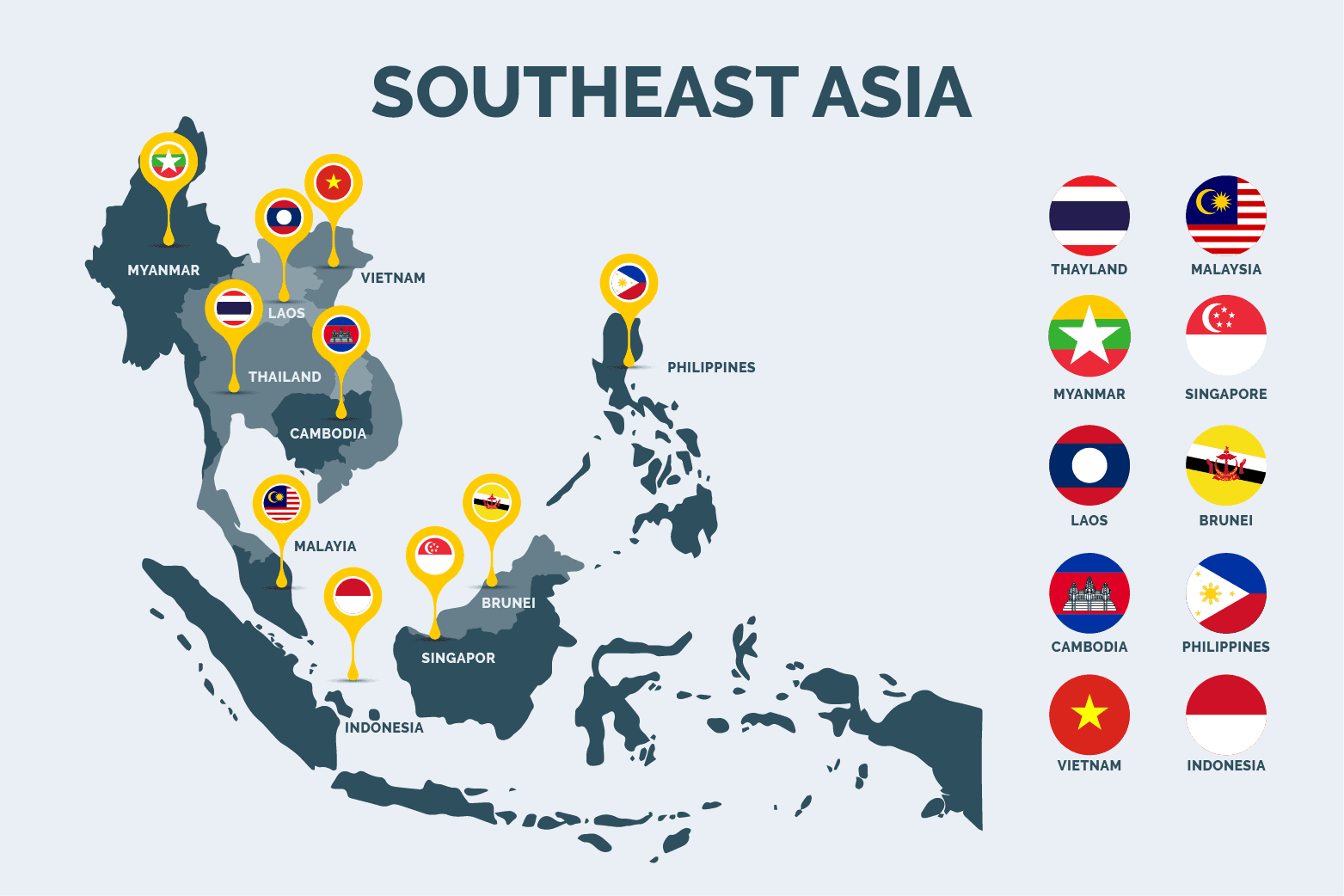
Southeast Asia's $162 Billion Food Market: Why Indian Exporters Are Perfectly Positioned
Southeast Asia's packaged food market is forecast to hit $162 billion by 2029, but the region's food supply chains are fracturing under export restrictions, Chinese import flooding, and Middle East-driven fertilizer disruption. Here's why certified, traceable Indian food exports are becoming the structural answer for buyers across Indonesia, Vietnam, Malaysia, the Philippines, and Singapore.
A
Adarsh Tripathi
Jul 24, 2026
Featured

Global Trade & Customs Policy•9 min read
The EU De Minimis Rule Changed This Week: What It Means for European Food Importers
From July 1, 2026, the EU abolished its €150 customs duty exemption and replaced it with a temporary €3 flat-rate duty per item, reshaping low-value import economics across Europe. Shein and Temu have already shifted to EU warehousing in response. Here is what the change means for European food importers sourcing from India, including the India-EU FTA intersection and practical next steps.
A
Adarsh Tripathi
Jul 23, 2026
Featured
Global Trade & Logistics•9 min read
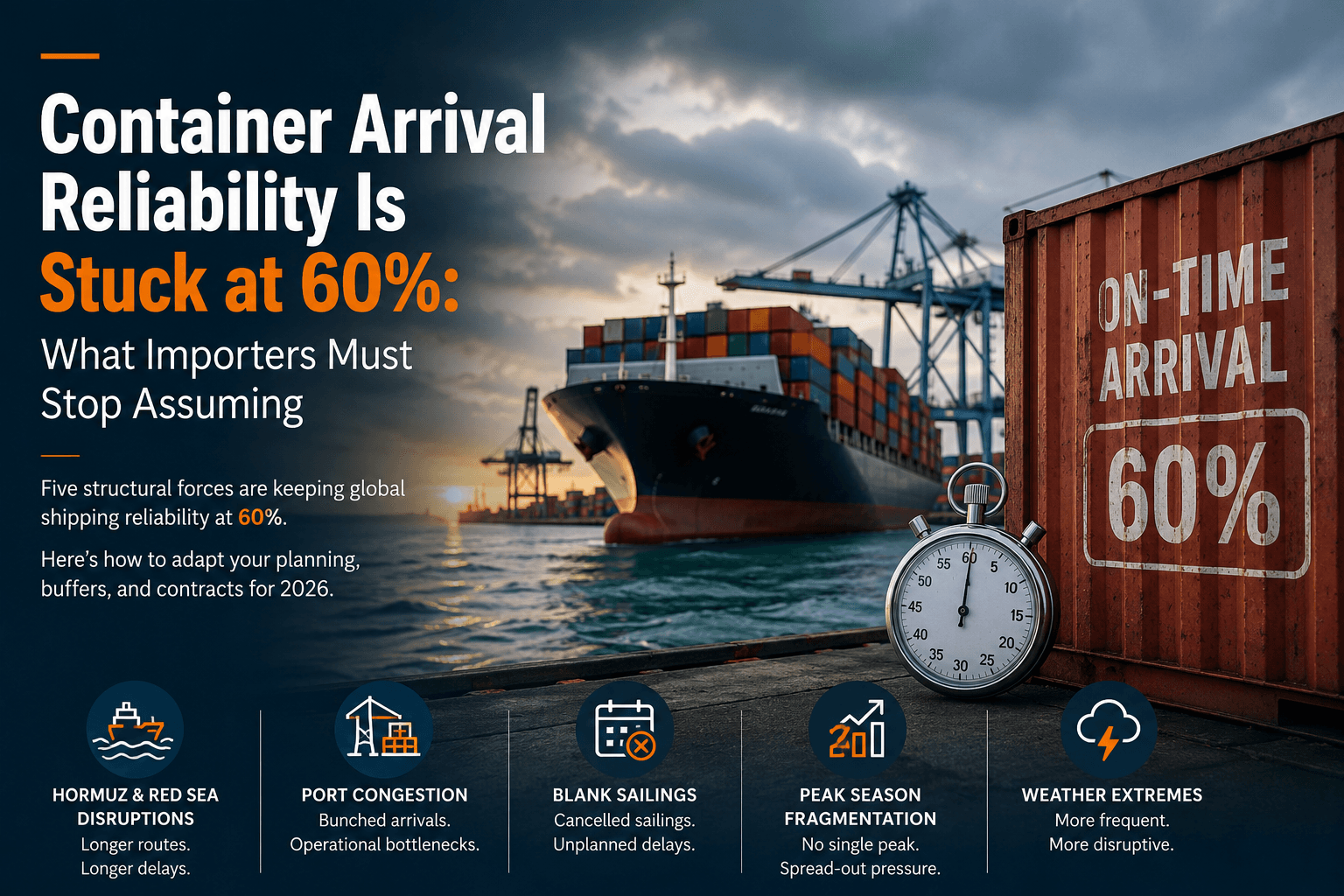
Container Arrival Reliability Is Stuck at 60%: What Importers Must Stop Assuming
Container arrival reliability has hovered just above 60% since late 2025, far below the historical 75-80% benchmark, and five compounding structural forces mean it isn't recovering soon. Here's what importers — especially those sourcing from India — need to change about inventory buffers, contracts, and replenishment planning.
A
Adarsh Tripathi
Jul 16, 2026
Featured
Global Trade & Sourcing Strategy•9 min read
China+1 Is Now China+2: How the Global Sourcing Map Is Being Redrawn and What Food Importers Should Do
McKinsey confirms China+1 has failed as ASEAN origins face dual pressure from US tariffs and Chinese import flooding. Learn why India has emerged as the anchor of the new China+2 global sourcing map, with simultaneous trade deals with the US, UK, EU, and EFTA, and what food importers should do next.
A
Adarsh Tripathi
Jul 12, 2026
Featured
Global Trade & Food Security•10 min read
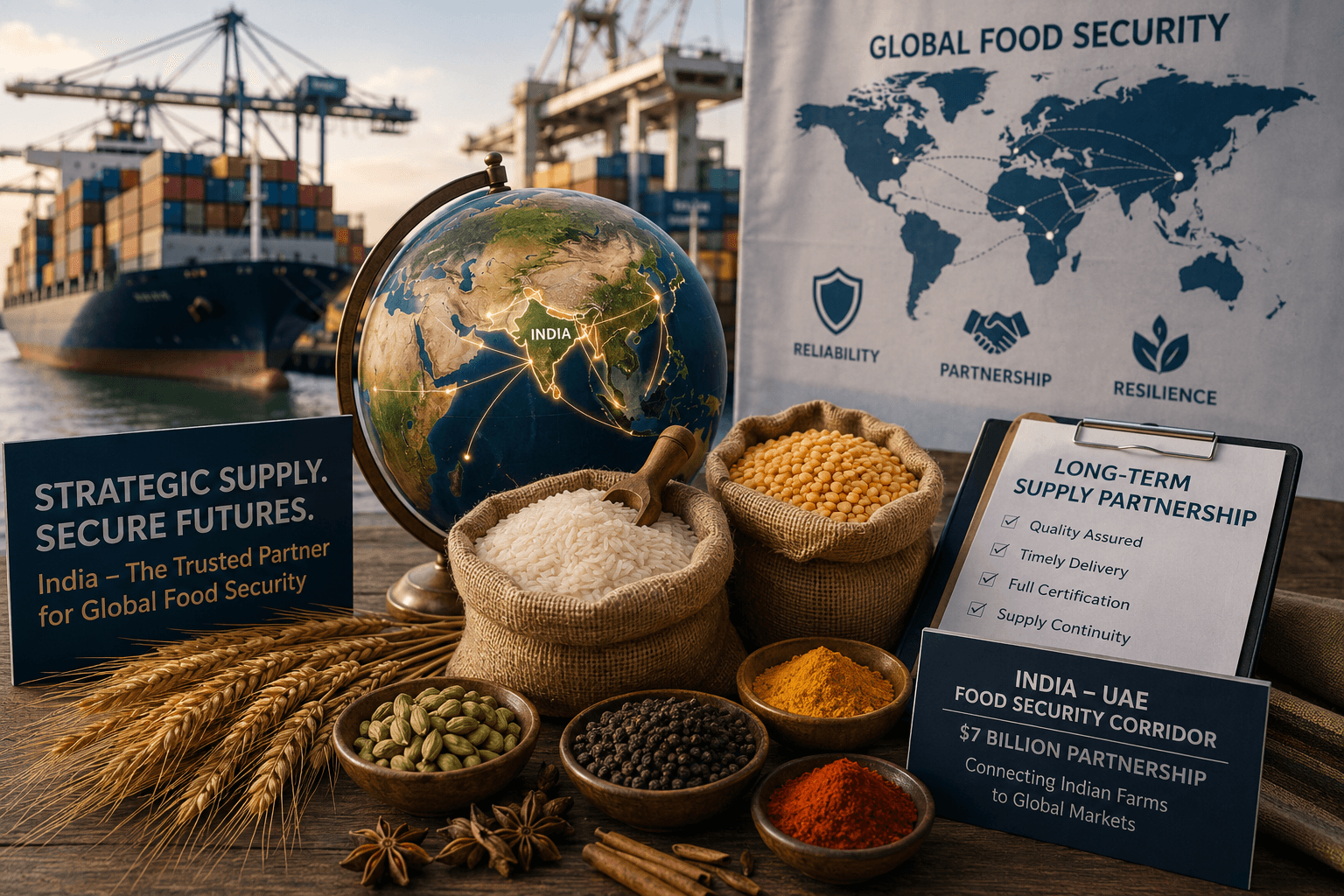
The Global Food Security Crisis Is Creating a New Class of Strategic Importer - Here Is Why India Is the Answer
The GCC depends on imports for up to 85% of its food. Egypt holds 4.5M tonnes of wheat reserves. Sweden is stockpiling 3,000 calories per citizen. Food security anxiety is reshaping global import demand. Here is India's role in this new order.
A
Adarsh Tripathi
Jul 3, 2026
Featured
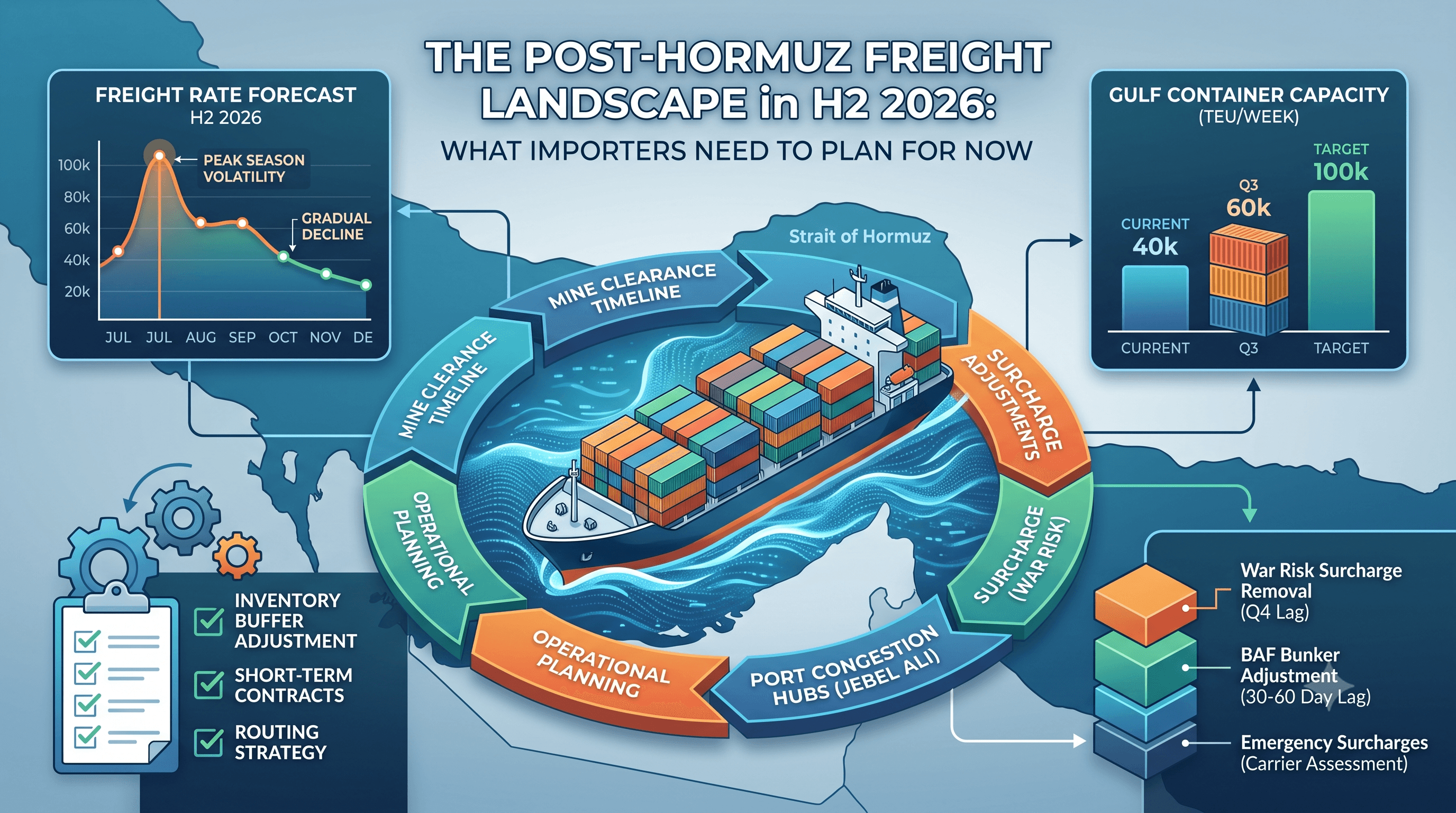
Global Trade & Logistics•9 min read
The Post-Hormuz Freight Landscape in H2 2026: What Importers Need to Plan For Now
The US-Iran memorandum was signed, but the freight market isn't behaving as if normalization is imminent - and it shouldn't. Here's the real data on Gulf capacity, surcharge timelines, mine clearance, and port congestion that importers need to build an H2 2026 logistics plan around.
A
Adarsh Tripathi
Jul 2, 2026
Featured

Global Trade & Supply Chain•11 min read
Geopolitics Has Replaced Cost as the Primary Supply Chain Design Factor - Here Is What That Means for Importers
McKinsey, UNCTAD, and Frost & Sullivan all agree: geopolitics now drives supply chain design more than cost. 18,000 new trade measures since 2020. India's exports hit an 18% growth record in May 2026. Here is what every importer needs to understand right now.
M
Mayank Verma
Jun 30, 2026
Featured

Global Trade•11 min read
The US-Iran Deal Is Reopening the Strait of Hormuz - What Importers Should Do Now
The US and Iran have reached an initial agreement to reopen the Strait of Hormuz, but normalization will take months rather than days. Learn what the deal means for importers, freight costs, logistics, and supply chain planning.
A
Adarsh Tripathi
Jun 26, 2026
Featured
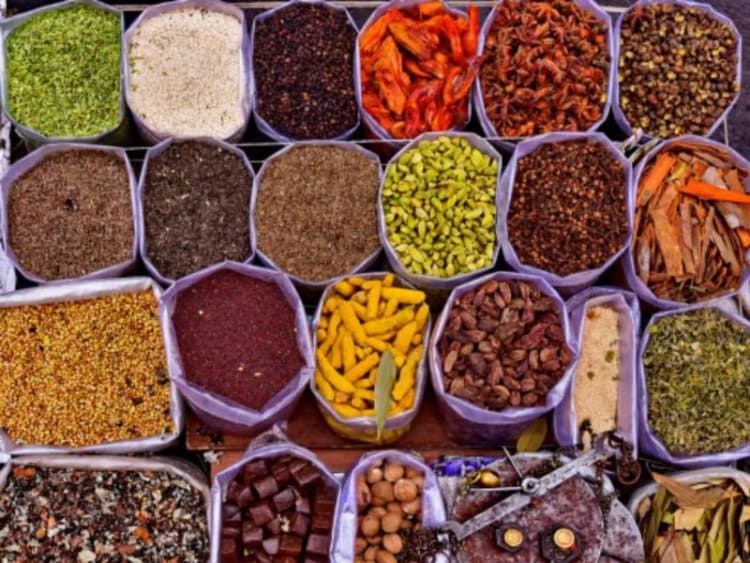
Functional Ingredients & Nutraceutical Trade•11 min read
From the Spice Rack to the Supplement Aisle: How Functional Ingredients Are Reshaping Spice Import Demand
Spices are no longer purchased solely for flavor and aroma. Turmeric, black pepper, ginger, and cumin are increasingly being sourced as functional ingredients for nutraceutical, pharmaceutical, and wellness applications, creating new opportunities for importers and suppliers.
A
Adarsh Tripathi
Jun 26, 2026
Featured
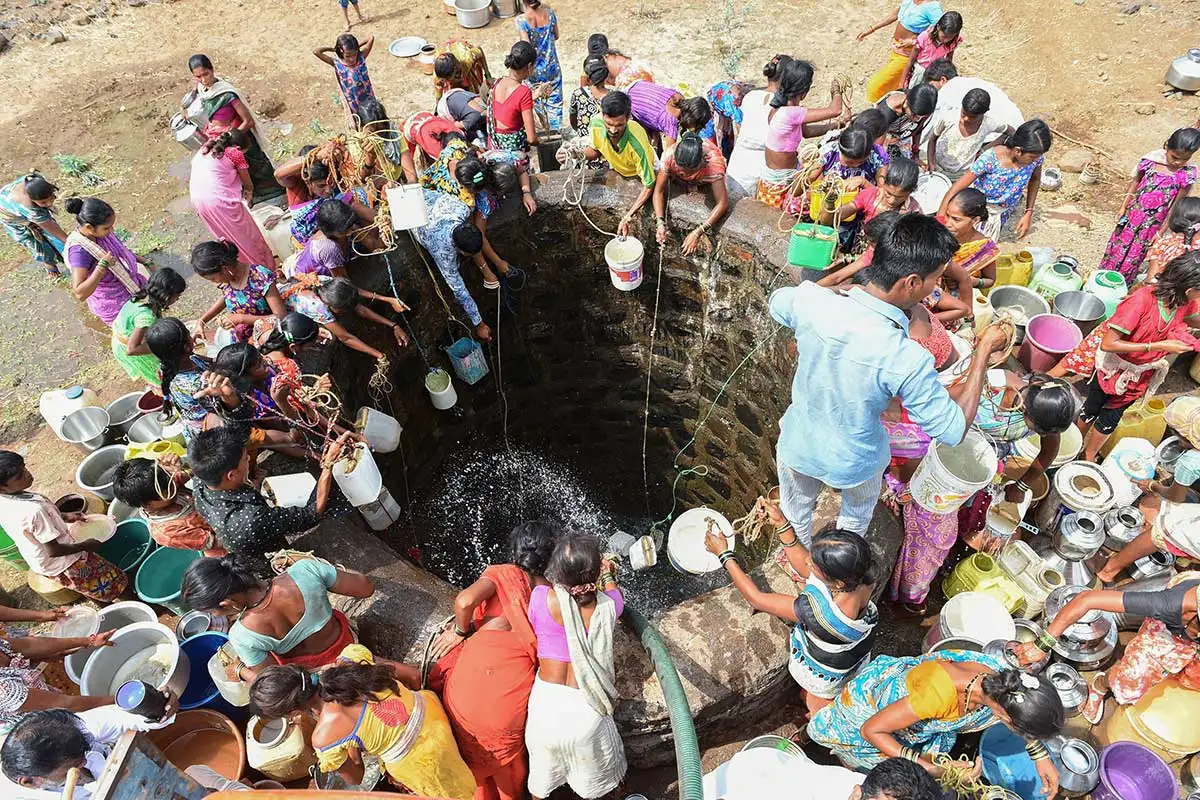
Climate Risk & Spice Trade•8 min read
Climate Change and Indian Spice Crops: What Every Importer Needs to Build Into Their Strategy
Climate volatility is reshaping India's spice industry through lower yields, quality degradation, delayed harvests, and increased supply chain uncertainty. Importers who build climate resilience into sourcing, inventory, and procurement strategies will be better positioned to manage future disruptions.
A
Adarsh Tripathi
Jun 13, 2026
Featured
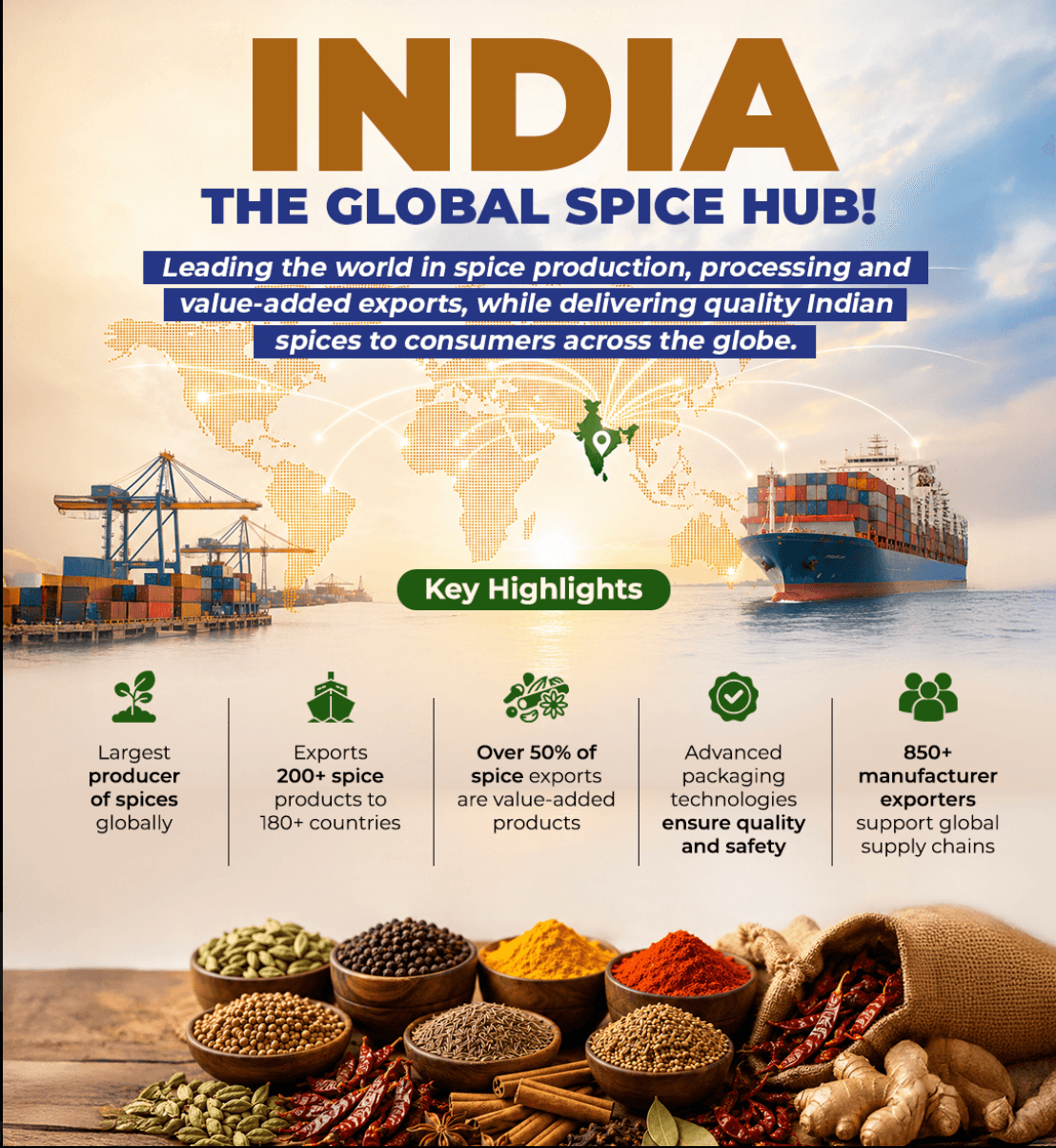
Spices & Agriculture•9 min read
How Geopolitics Is Permanently Redrawing the Global Spice Supply Map
Syria's cumin collapsed 86%. Iran faces sanctions. Turkey hit by drought. Vietnam pepper at decade highs. Geopolitics has permanently shifted global spice supply toward India. Here's what importers need to know.
M
Mayank Verma
Jun 12, 2026
Featured
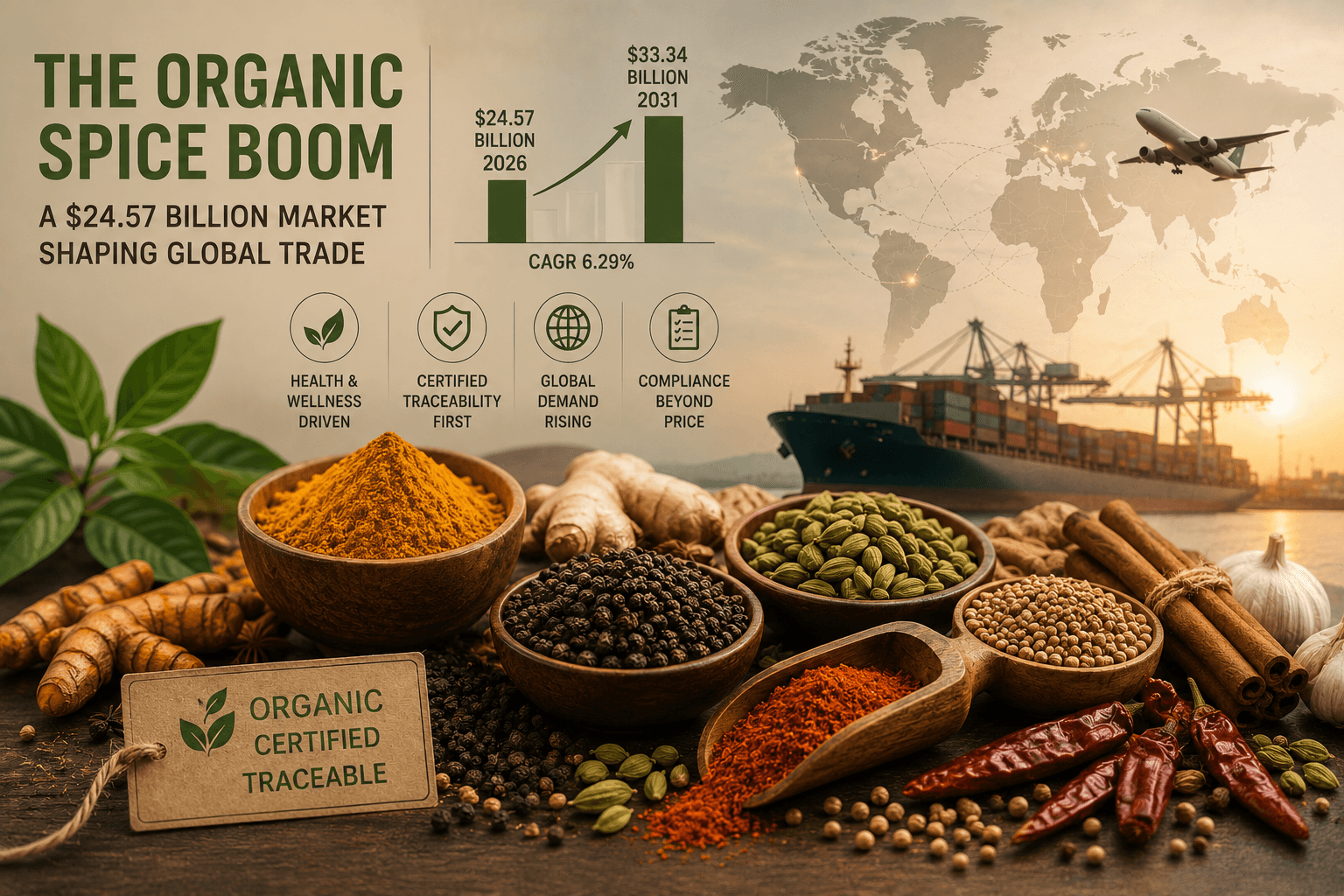
Organic Spices & Global Trade•10 min read
The Organic Spice Boom: What the $24.57 Billion Market Means for Global Importers
The organic spice market has reached $24.57 billion and is projected to hit $33.34 billion by 2031. For global importers, the defining shift is not the scale — it is that certified traceability now outweighs price as a market entry requirement. This breakdown covers what the USDA SOE rule, EU organic regulations, and India's NPOP infrastructure mean for your 2026 sourcing strategy.
A
Arjun Mehta
May 10, 2026
Featured
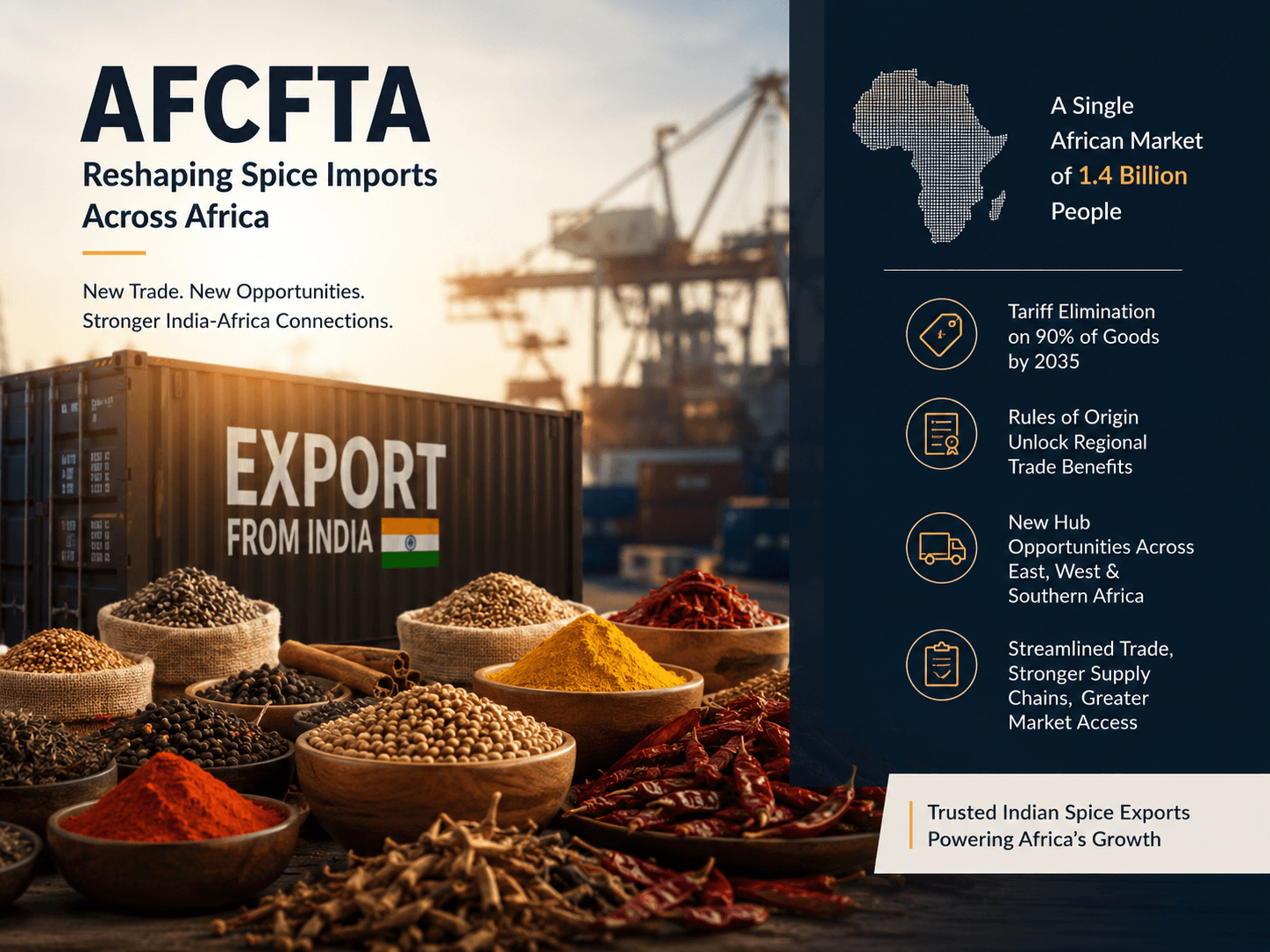
Global Trade & Export•12 min read
How the AFCFTA Is Reshaping Spice Imports Across Africa - What Buyers Need to Know
The AFCFTA is transforming the way African spice importers source, process, distribute, and price Indian spices across regional markets. From tariff elimination and rules of origin to documentation and regional hub strategies, buyers must understand how this trade framework is reshaping the India-Africa spice supply chain.
A
Adarsh Tripathi
May 7, 2026
Featured
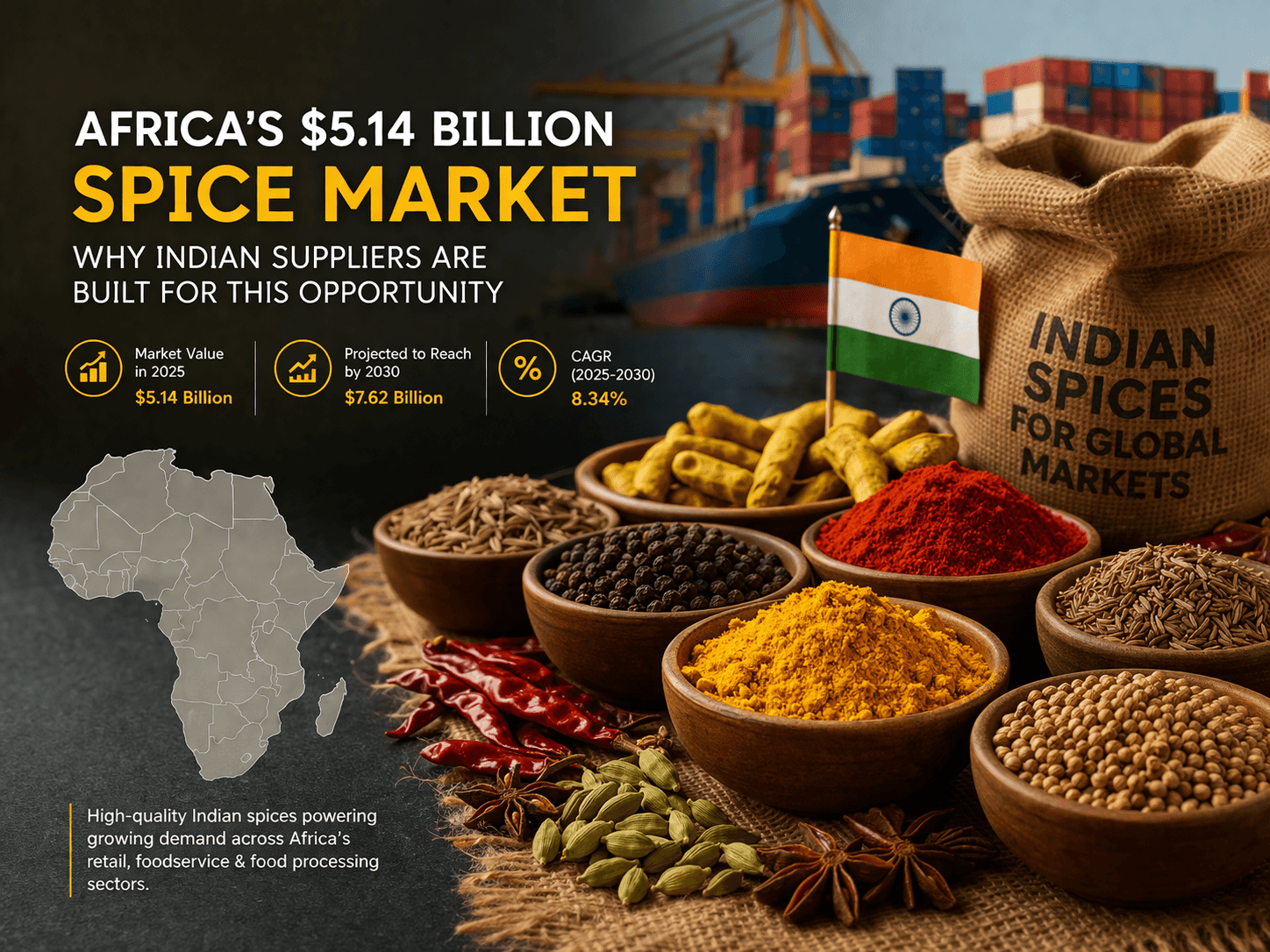
Global Trade•12 min read
Africa's $5.14 Billion Spice Market: Why Indian Suppliers Are Built for This Opportunity
Africa’s spice and seasoning market is rapidly expanding, creating a major opportunity for Indian suppliers to meet rising demand across urban, premium, and industrial food sectors.
A
Adarsh Tripathi
May 5, 2026
Featured
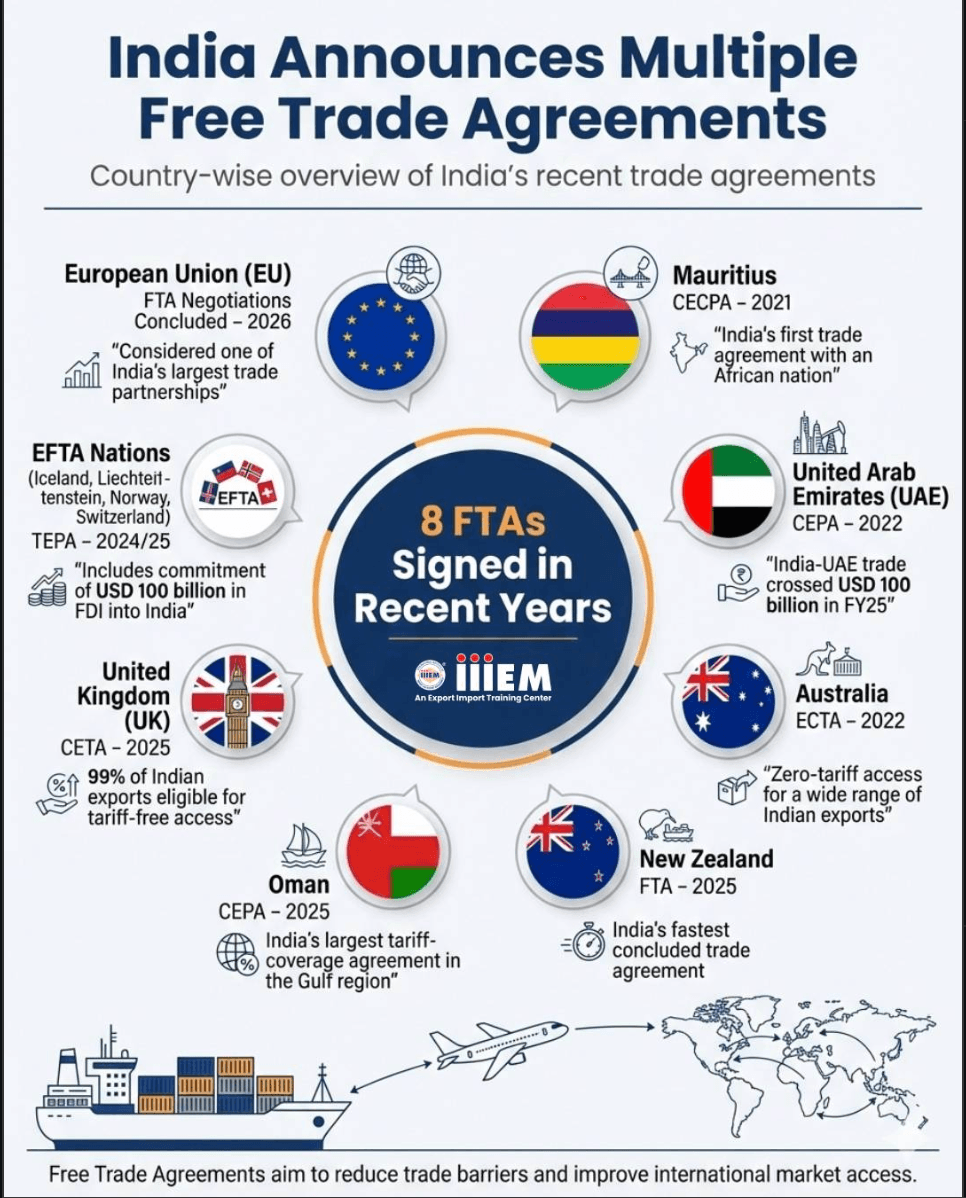
Global Trade•11 min read
India Is Winning the Global Trade Realignment - Here Is What Importers Need to Know
Over $165 billion in trade has shifted away from China in 2026, and India is the biggest winner. Here is what importers need to know about sourcing from India right now.
A
Adarsh Tripathi
Apr 20, 2026
Featured
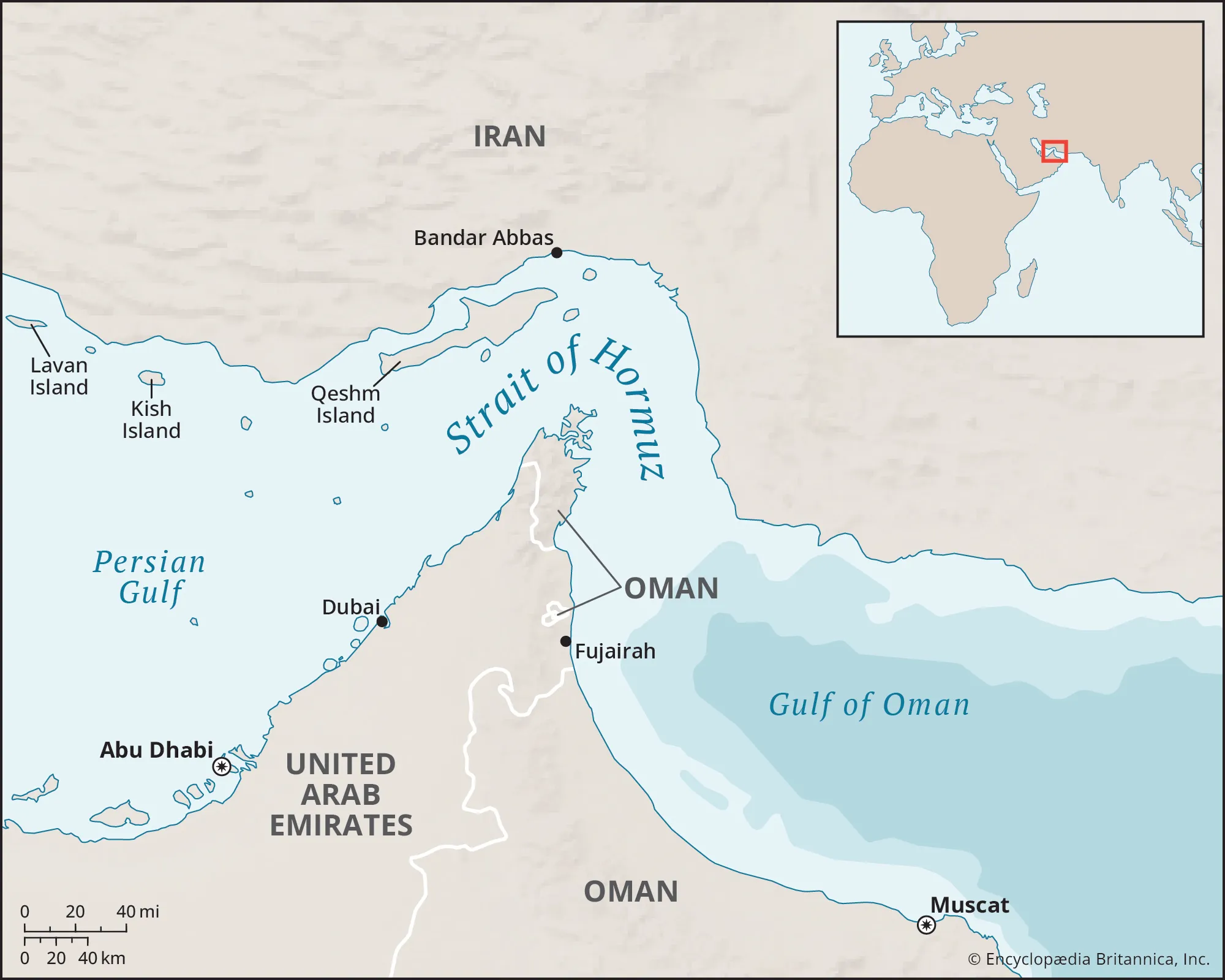
Global Trade•12 min read
The Strait of Hormuz Crisis: What European Food Importers Must Know Right Now
The Strait of Hormuz crisis has shut down one of the world's most critical trade routes. Here's what European food importers must understand about costs, logistics, and supply risks right now.
A
Adarsh Tripathi
Apr 17, 2026
Featured
Global Trade•10 min read
Navigating Global Trade Shifts in 2026: What Exporters Need to Know
Global trade in 2026 is shifting fast — tariffs, conflicts, and new trade deals are reshaping markets. Here is what exporters need to know to stay competitive.
A
Adarsh Tripathi
Apr 15, 2026
Featured
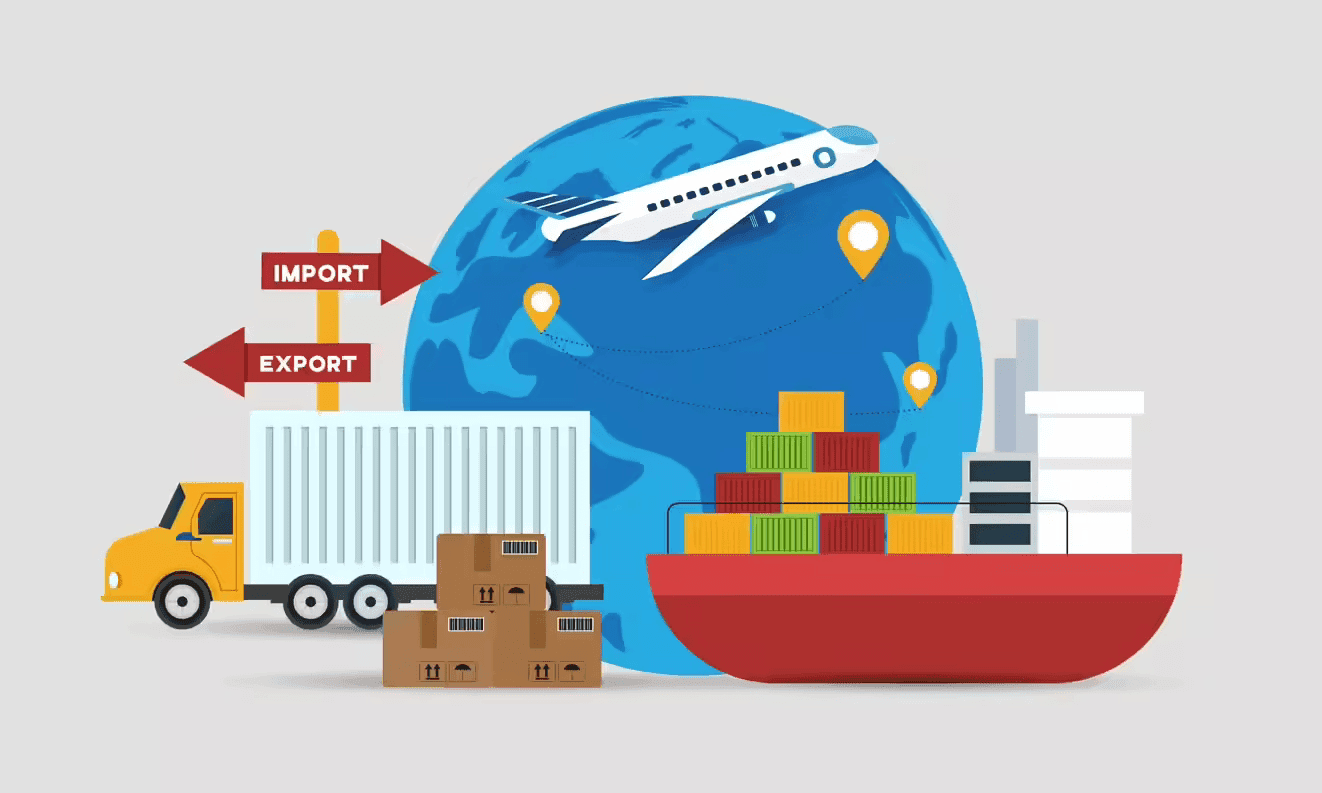
Export Strategy•11 min read
Building a Resilient Export Strategy in 2026: Lessons from a Turbulent Trade World
Resilience is the defining trade strategy of 2026. Learn how exporters are adapting to tariffs, disruptions, and global uncertainty to build stronger international businesses.
M
Mayank Verma
Apr 12, 2026
Featured
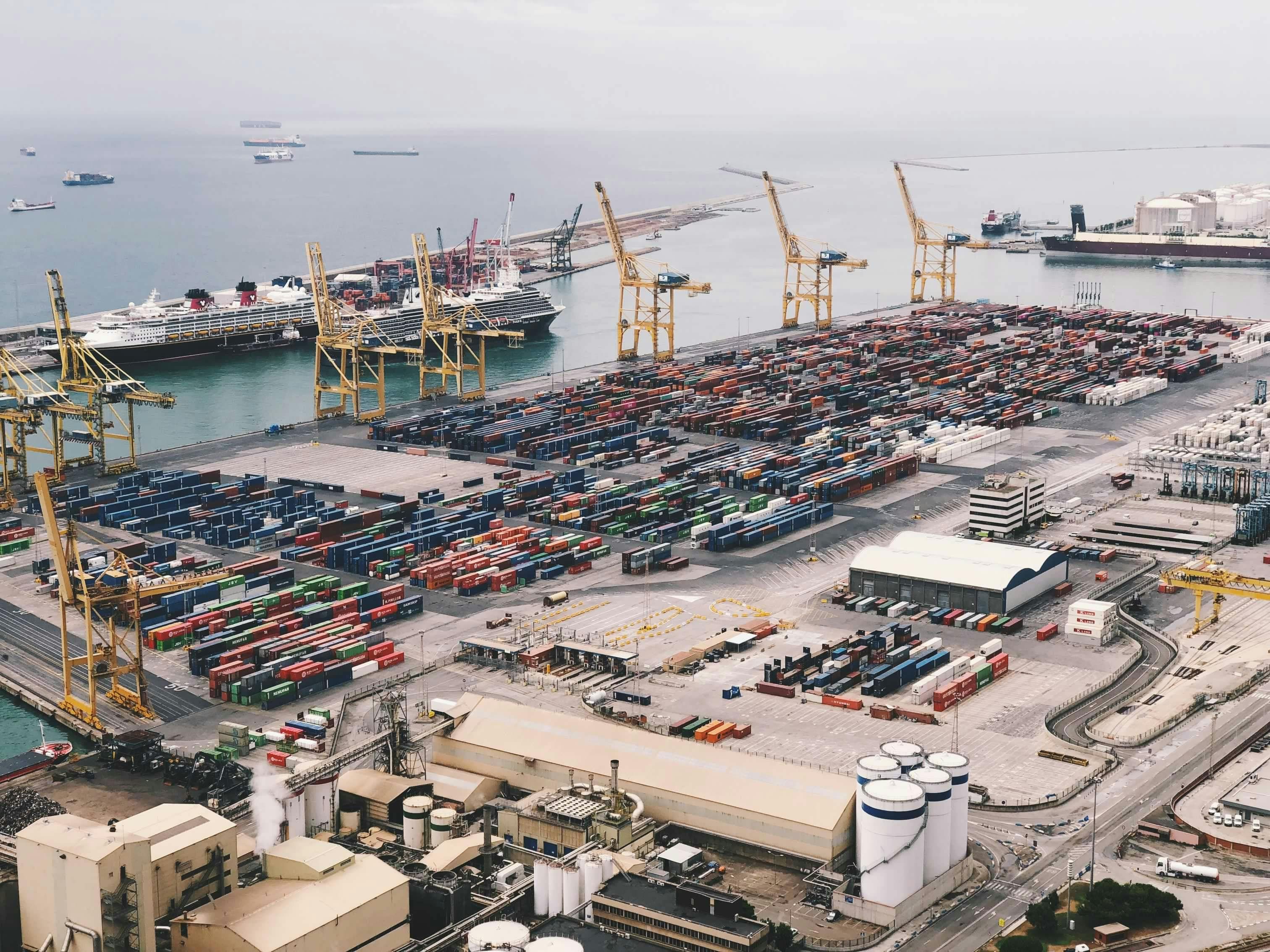
Global Trade•9 min read
Global Trade Growth Is Slowing in 2026 What the UNCTAD April Update Means for Importers
UNCTAD's April 2026 trade update says growth is slowing and fragility is rising. The Strait of Hormuz, tariffs, and rising costs are converging. Here is what importers need to act on now.
A
Adarsh Tripathi
Apr 9, 2026
Featured

International Trade•9 min read
The India-UK Trade Deal: What British Importers Need to Know Before May 2026
The India-UK CETA goes live in May 2026, making 99% of Indian exports duty-free to the UK. Here is what British importers need to know to act before the window opens.
A
Adarsh Tripathi
Mar 20, 2026
Featured

International Trade•10 min read
Germany's Spice Market: A $232 Million Opportunity for European Importers
Germany dominates Europe's spice market with $232M in annual imports. Here is what European importers need to know about sourcing Indian spices for this demanding market.
M
Mayank Verma
Mar 12, 2026
Featured
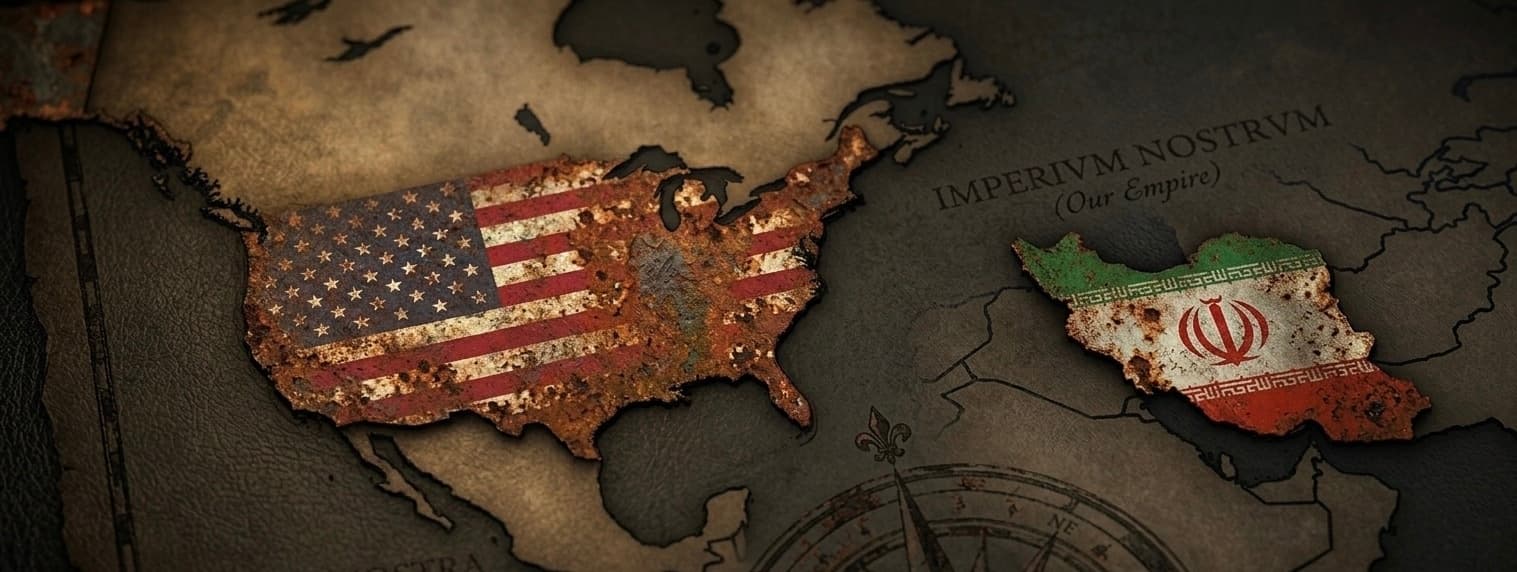
Energy & Geopolitics•12 min read
The US-Iran War and Global Oil Supply: What Is Actually Happening
The US-Iran war has shut the Strait of Hormuz and sent Brent crude to $83. Here is a clear breakdown of what is happening to global oil supply and where prices go from here.
M
Mayank Verma
Mar 5, 2026
Featured
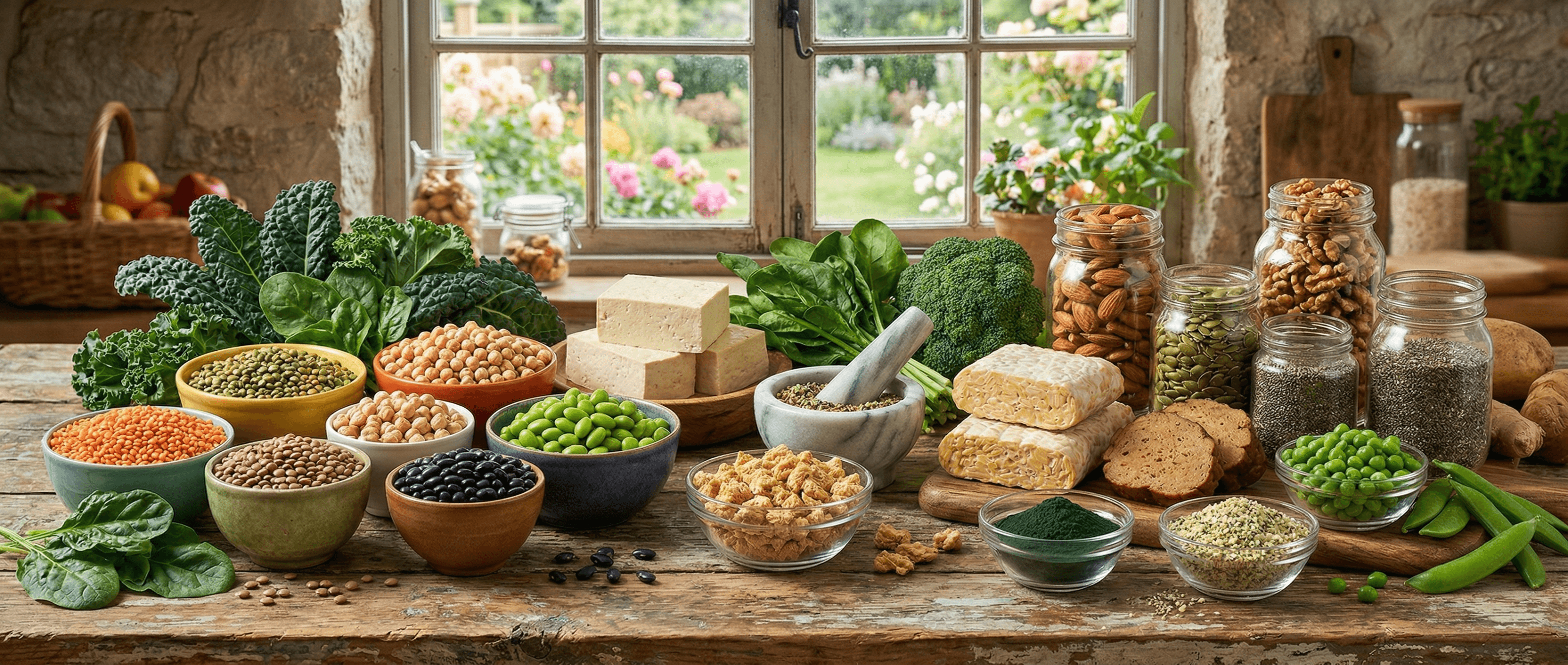
Agriculture & Commodities•10 min read
The Plant-Based Protein Boom: Why Global Importers Are Turning to Indian Lentils and Pulses
The plant-based protein market is heading to $43B by 2034. Indian lentils, chickpeas, and pulses sit at the center of this shift. Here's what global importers need to know.
A
Adarsh Tripathi
Mar 1, 2026
Featured
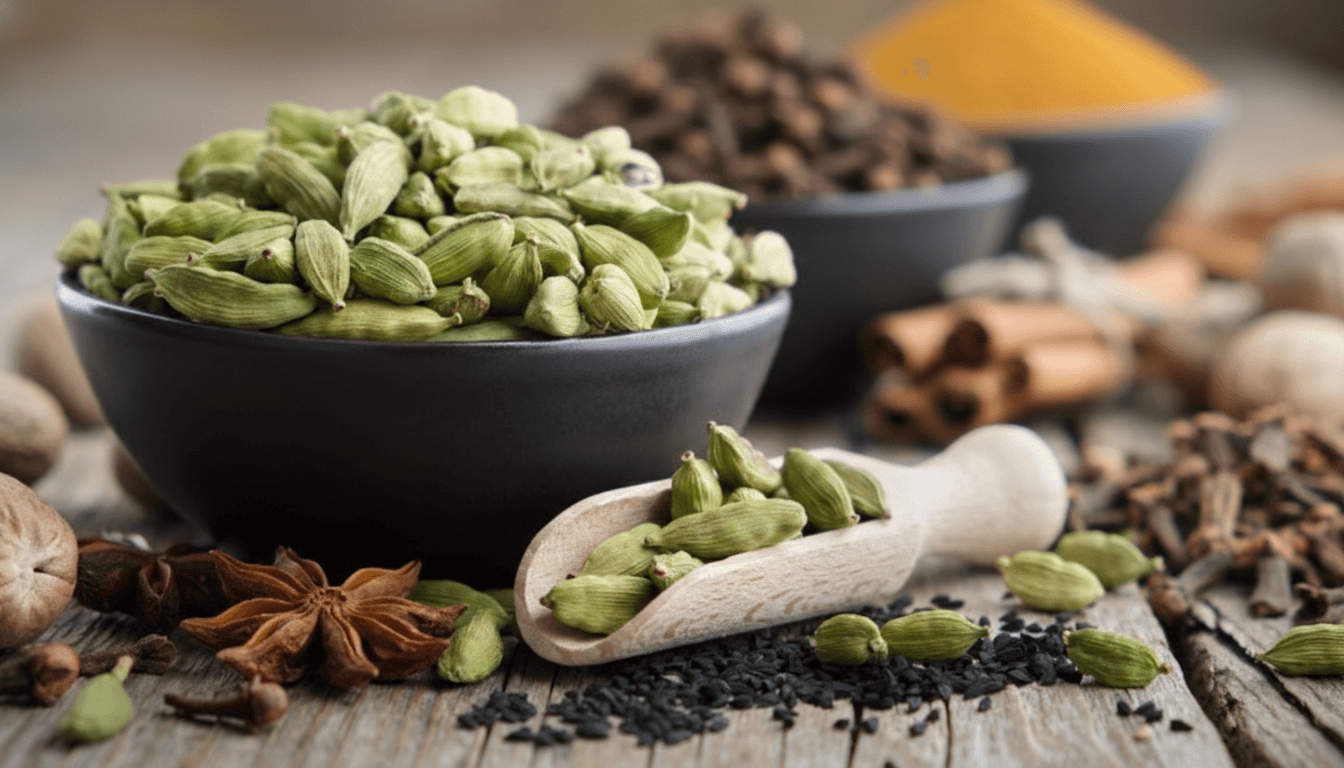
Spices & Commodities•9 min read
The Cardamom Boom: A $1.5 Billion Market Hiding in Plain Sight
Cardamom is the world's third most expensive spice and demand is accelerating. Here's what serious spice buyers need to know about the global market in 2025.
A
Adarsh Tripathi
Feb 22, 2026
Featured

International Trade•7 min read
The US-Canada Trade War: Why Importers Are Turning to India
The US-Canada trade war has fractured a $72B food partnership, sending costs soaring. Here's why smart importers on both sides are pivoting to Indian suppliers.
A
Adarsh Tripathi
Feb 19, 2026
Featured
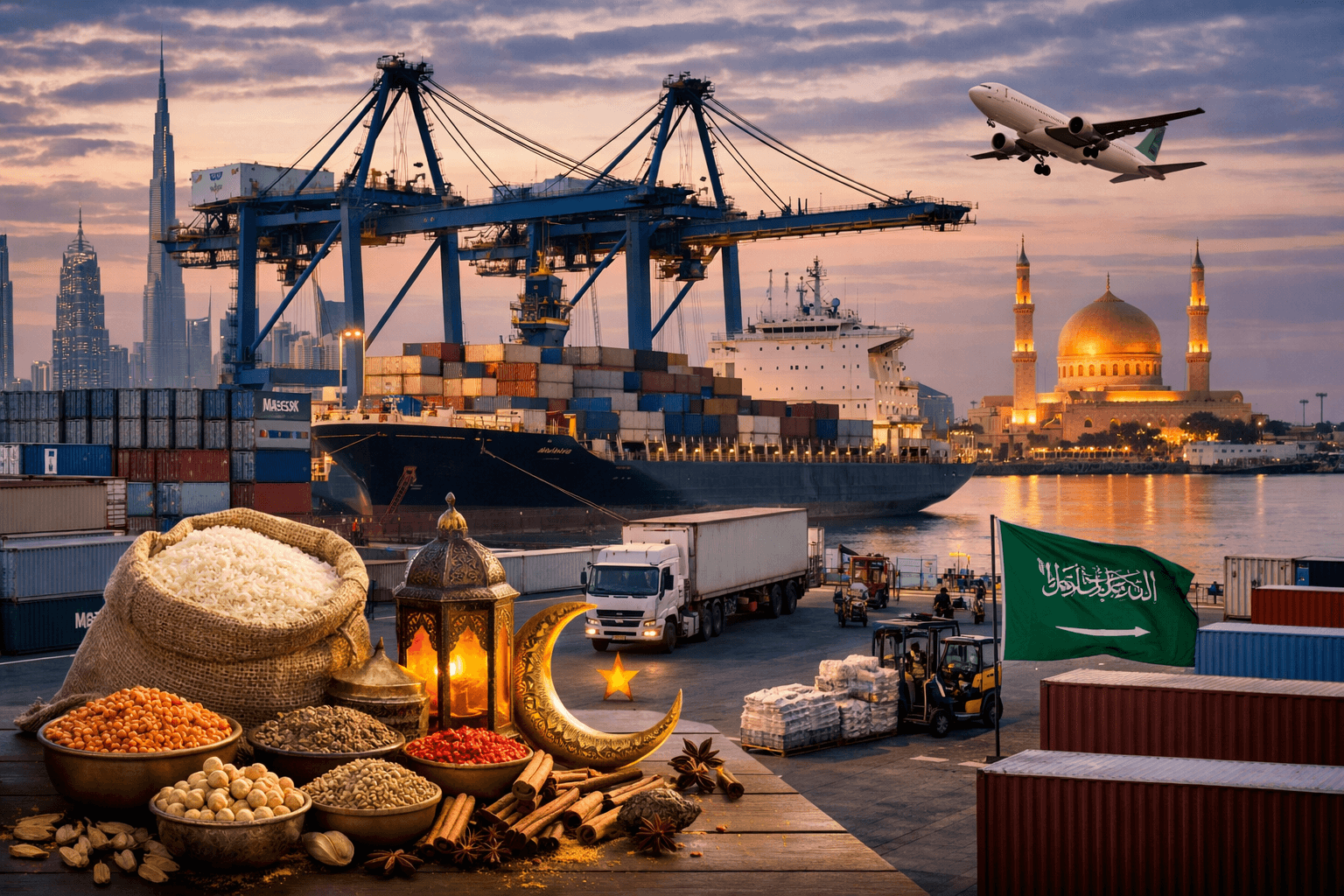
International Trade•9 min read
Ramadan 2026 Food Supply Guide Importers:Sourcing for Basmati Rice, Spices & Halal Products
Urgent: Only 2 Weeks Until Ramadan 2026 - GCC Food Importers Emergency Sourcing Guide
H
Himanshu Sharma
Feb 8, 2026
Featured

International Trade•12 min read
US-India Trade Deal 2026: How American Importers Can Save on Indian Spices, Rice & Food Products
Breaking: Save 32% on Indian Imports as US-India Tariffs Drop to 18%
M
Mayank Verma
Feb 8, 2026
Featured
International Trade•11 min read
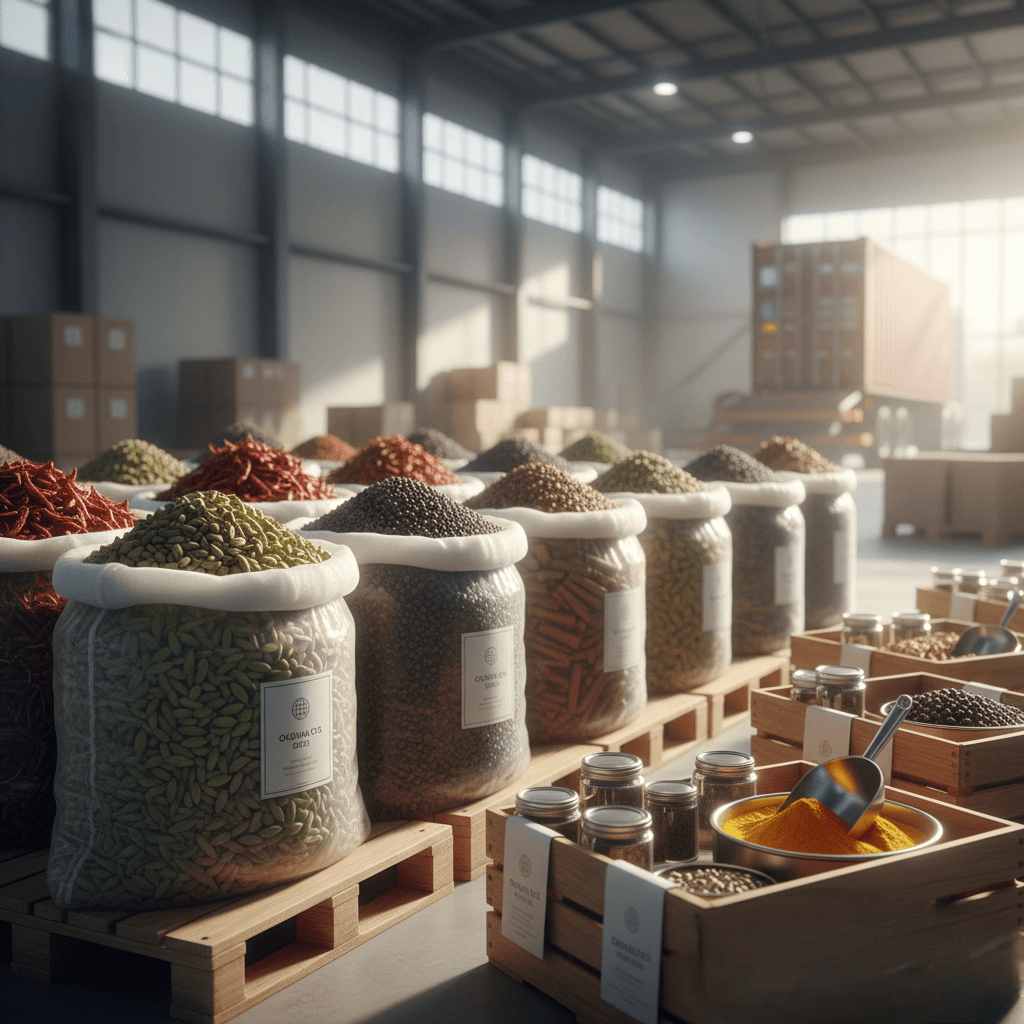
Complete Guide to Exporting Organic Spices to European Markets in 2026
Complete guide to exporting organic spices from India to Netherlands and EU. Learn EU organic certification, regulations, market opportunities and how to succeed in Europe’s €50 billion organic market.
A
Ankur Sharma
Feb 2, 2026
Featured
Logistics•17 min read
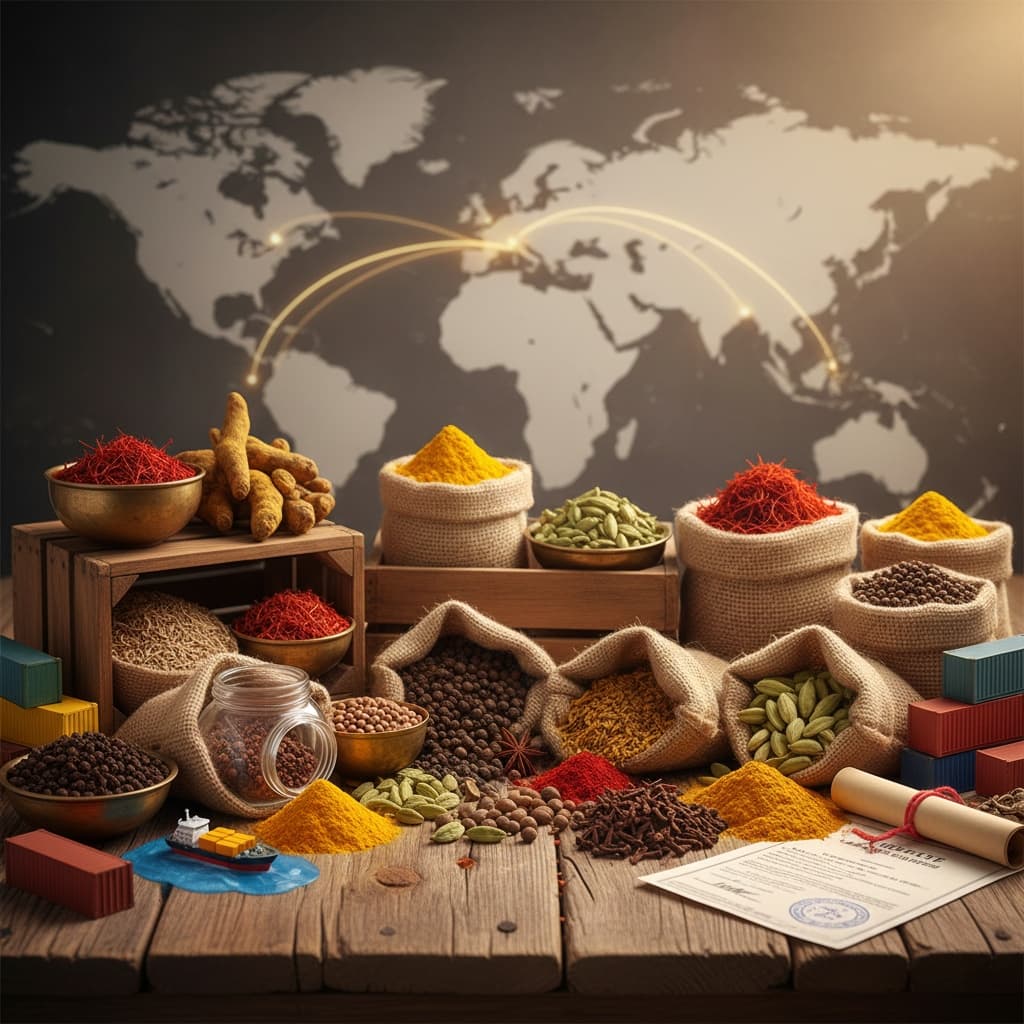
How to Import Spices from India: A Complete Guide
Your step-by-step guide to importing Indian spices, covering supplier selection, documentation, regulations, shipping, and customs clearance to build a successful spice import business.
A
Aryan Tripathi
Dec 20, 2025
All Articles(51)
Global Trade Insights
Jul 24, 2026•11 min read
Southeast Asia's $162 Billion Food Market: Why Indian Exporters Are Perfectly Positioned
Southeast Asia's packaged food market is forecast to hit $162 billion by 2029, but the region's food supply chains are fracturing under export restrictions, Chinese import flooding, and Middle East-driven fertilizer disruption. Here's why certified, traceable Indian food exports are becoming the structural answer for buyers across Indonesia, Vietnam, Malaysia, the Philippines, and Singapore.
Southeast AsiaFood ExportsIndia Exports
A
Adarsh TripathiGlobal Trade & Customs Policy
Jul 23, 2026•9 min read
The EU De Minimis Rule Changed This Week: What It Means for European Food Importers
From July 1, 2026, the EU abolished its €150 customs duty exemption and replaced it with a temporary €3 flat-rate duty per item, reshaping low-value import economics across Europe. Shein and Temu have already shifted to EU warehousing in response. Here is what the change means for European food importers sourcing from India, including the India-EU FTA intersection and practical next steps.
EU De Minimis RuleEU Customs Reform 2026India-EU FTA
A
Adarsh TripathiGlobal Trade & Logistics
Jul 16, 2026•9 min read
Container Arrival Reliability Is Stuck at 60%: What Importers Must Stop Assuming
Container arrival reliability has hovered just above 60% since late 2025, far below the historical 75-80% benchmark, and five compounding structural forces mean it isn't recovering soon. Here's what importers — especially those sourcing from India — need to change about inventory buffers, contracts, and replenishment planning.
Container ShippingSupply Chain ReliabilityOcean Freight 2026
A
Adarsh TripathiGlobal Trade & Sourcing Strategy
Jul 12, 2026•9 min read
China+1 Is Now China+2: How the Global Sourcing Map Is Being Redrawn and What Food Importers Should Do
McKinsey confirms China+1 has failed as ASEAN origins face dual pressure from US tariffs and Chinese import flooding. Learn why India has emerged as the anchor of the new China+2 global sourcing map, with simultaneous trade deals with the US, UK, EU, and EFTA, and what food importers should do next.
China+1China+2Global Sourcing
A
Adarsh TripathiGlobal Trade & Food Security
Jul 3, 2026•10 min read
The Global Food Security Crisis Is Creating a New Class of Strategic Importer - Here Is Why India Is the Answer
The GCC depends on imports for up to 85% of its food. Egypt holds 4.5M tonnes of wheat reserves. Sweden is stockpiling 3,000 calories per citizen. Food security anxiety is reshaping global import demand. Here is India's role in this new order.
Food SecurityIndia ExportsGCC Trade
A
Adarsh TripathiGlobal Trade & Logistics
Jul 2, 2026•9 min read
The Post-Hormuz Freight Landscape in H2 2026: What Importers Need to Plan For Now
The US-Iran memorandum was signed, but the freight market isn't behaving as if normalization is imminent - and it shouldn't. Here's the real data on Gulf capacity, surcharge timelines, mine clearance, and port congestion that importers need to build an H2 2026 logistics plan around.
Strait of HormuzFreight Rates 2026Container Shipping
A
Adarsh TripathiGlobal Trade & Supply Chain
Jun 30, 2026•11 min read
Geopolitics Has Replaced Cost as the Primary Supply Chain Design Factor - Here Is What That Means for Importers
McKinsey, UNCTAD, and Frost & Sullivan all agree: geopolitics now drives supply chain design more than cost. 18,000 new trade measures since 2020. India's exports hit an 18% growth record in May 2026. Here is what every importer needs to understand right now.
geopoliticssupply chainfriend-shoring
M
Mayank VermaGlobal Trade
Jun 26, 2026•11 min read
The US-Iran Deal Is Reopening the Strait of Hormuz - What Importers Should Do Now
The US and Iran have reached an initial agreement to reopen the Strait of Hormuz, but normalization will take months rather than days. Learn what the deal means for importers, freight costs, logistics, and supply chain planning.
US-IranStrait of HormuzGlobal Trade
A
Adarsh TripathiFunctional Ingredients & Nutraceutical Trade
Jun 26, 2026•11 min read
From the Spice Rack to the Supplement Aisle: How Functional Ingredients Are Reshaping Spice Import Demand
Spices are no longer purchased solely for flavor and aroma. Turmeric, black pepper, ginger, and cumin are increasingly being sourced as functional ingredients for nutraceutical, pharmaceutical, and wellness applications, creating new opportunities for importers and suppliers.
Functional IngredientsNutraceuticalsTurmeric
A
Adarsh TripathiClimate Risk & Spice Trade
Jun 13, 2026•8 min read
Climate Change and Indian Spice Crops: What Every Importer Needs to Build Into Their Strategy
Climate volatility is reshaping India's spice industry through lower yields, quality degradation, delayed harvests, and increased supply chain uncertainty. Importers who build climate resilience into sourcing, inventory, and procurement strategies will be better positioned to manage future disruptions.
Climate ChangeIndian Spice CropsSpice Supply Chain
A
Adarsh TripathiSpices & Agriculture
Jun 12, 2026•9 min read
How Geopolitics Is Permanently Redrawing the Global Spice Supply Map
Syria's cumin collapsed 86%. Iran faces sanctions. Turkey hit by drought. Vietnam pepper at decade highs. Geopolitics has permanently shifted global spice supply toward India. Here's what importers need to know.
Global Spice TradeIndian Spice ExportsCumin Supply
M
Mayank VermaOrganic Spices & Global Trade
May 10, 2026•10 min read
The Organic Spice Boom: What the $24.57 Billion Market Means for Global Importers
The organic spice market has reached $24.57 billion and is projected to hit $33.34 billion by 2031. For global importers, the defining shift is not the scale — it is that certified traceability now outweighs price as a market entry requirement. This breakdown covers what the USDA SOE rule, EU organic regulations, and India's NPOP infrastructure mean for your 2026 sourcing strategy.
Organic SpicesIndia ExportsNPOP Certification
A
Arjun MehtaGlobal Trade & Export
May 7, 2026•12 min read
How the AFCFTA Is Reshaping Spice Imports Across Africa - What Buyers Need to Know
The AFCFTA is transforming the way African spice importers source, process, distribute, and price Indian spices across regional markets. From tariff elimination and rules of origin to documentation and regional hub strategies, buyers must understand how this trade framework is reshaping the India-Africa spice supply chain.
AfCFTAAfrica Spice TradeIndian Spice Export
A
Adarsh TripathiGlobal Trade
May 5, 2026•12 min read
Africa's $5.14 Billion Spice Market: Why Indian Suppliers Are Built for This Opportunity
Africa’s spice and seasoning market is rapidly expanding, creating a major opportunity for Indian suppliers to meet rising demand across urban, premium, and industrial food sectors.
Africa spice marketIndian spice exportsglobal trade
A
Adarsh TripathiGlobal Trade
Apr 20, 2026•11 min read
India Is Winning the Global Trade Realignment - Here Is What Importers Need to Know
Over $165 billion in trade has shifted away from China in 2026, and India is the biggest winner. Here is what importers need to know about sourcing from India right now.
India Trade GrowthSupply Chain RealignmentChina Plus One Strategy
A
Adarsh TripathiGlobal Trade
Apr 17, 2026•12 min read
The Strait of Hormuz Crisis: What European Food Importers Must Know Right Now
The Strait of Hormuz crisis has shut down one of the world's most critical trade routes. Here's what European food importers must understand about costs, logistics, and supply risks right now.
Strait of Hormuz CrisisEuropean Food ImportsShipping Disruption
A
Adarsh TripathiGlobal Trade
Apr 15, 2026•10 min read
Navigating Global Trade Shifts in 2026: What Exporters Need to Know
Global trade in 2026 is shifting fast — tariffs, conflicts, and new trade deals are reshaping markets. Here is what exporters need to know to stay competitive.
Global Trade 2026India EU Trade DealTariffs and Policy
A
Adarsh TripathiExport Strategy
Apr 12, 2026•11 min read
Building a Resilient Export Strategy in 2026: Lessons from a Turbulent Trade World
Resilience is the defining trade strategy of 2026. Learn how exporters are adapting to tariffs, disruptions, and global uncertainty to build stronger international businesses.
Supply Chain ResilienceExport Strategy 2026Global Trade Trends
M
Mayank VermaGlobal Trade
Apr 9, 2026•9 min read
Global Trade Growth Is Slowing in 2026 What the UNCTAD April Update Means for Importers
UNCTAD's April 2026 trade update says growth is slowing and fragility is rising. The Strait of Hormuz, tariffs, and rising costs are converging. Here is what importers need to act on now.
UNCTAD Trade UpdateGlobal Trade 2026Supply Chain Risk
A
Adarsh TripathiInternational Trade
Mar 20, 2026•9 min read
The India-UK Trade Deal: What British Importers Need to Know Before May 2026
The India-UK CETA goes live in May 2026, making 99% of Indian exports duty-free to the UK. Here is what British importers need to know to act before the window opens.
India UK Trade DealCETA 2026UK Imports India
A
Adarsh Tripathi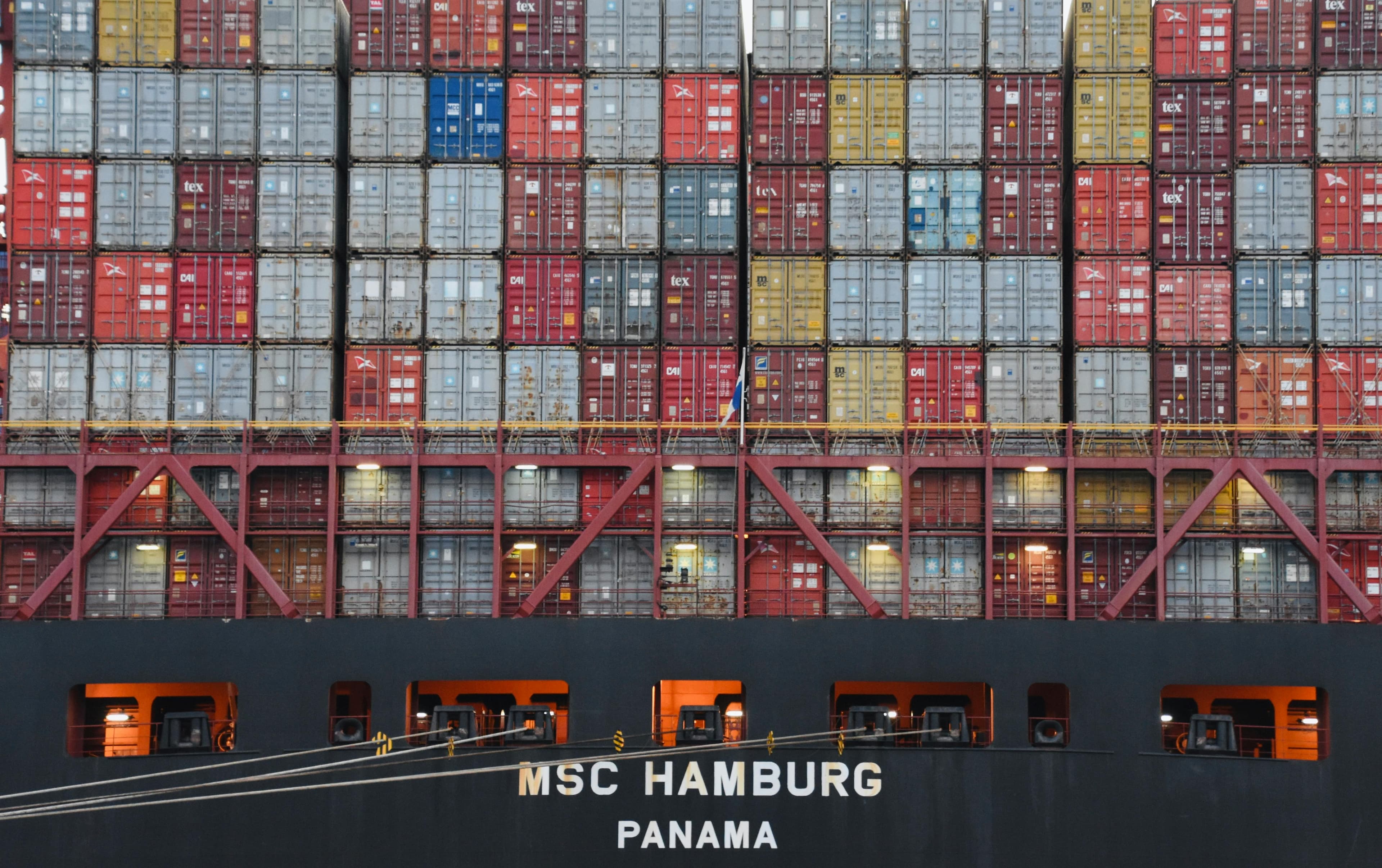
Logistics & Supply Chain
Mar 26, 2026•10 min read
FCL vs LCL: Which Shipping Method Is Right for Your India Import?
FCL or LCL for your India import? The break-even is 15 CBM and the cost gap is real. Here is a practical guide to making the right call for your shipment size and route.
FCL vs LCLIndia Import ShippingFreight Forwarding
A
Adarsh Tripathi
Global Trade
Mar 18, 2026•12 min read
Global Trade in March 2026: Five Crises Every Importer Is Navigating Right Now
Trump tariffs struck down, Strait of Hormuz disrupted, USMCA under review, and 3,000+ new trade measures in 2025. Here is the complete picture of global trade in 2026.
Global Trade 2026US Tariff PolicySupply Chain Crisis
A
Adarsh TripathiInternational Trade
Mar 12, 2026•10 min read
Germany's Spice Market: A $232 Million Opportunity for European Importers
Germany dominates Europe's spice market with $232M in annual imports. Here is what European importers need to know about sourcing Indian spices for this demanding market.
Germany Spice MarketEuropean Spice ImportsEU MRL Compliance
M
Mayank Verma
Global Trade
Mar 8, 2026•12 min read
The Middle East Conflict and Global Trade: What Every Importer Needs to Know
The Middle East conflict has closed the Strait of Hormuz, suspended Suez transits, and shut Gulf airspace. Here is a clear breakdown of what it means for global trade right now.
Middle East ConflictGlobal Trade DisruptionStrait of Hormuz
A
Adarsh TripathiEnergy & Geopolitics
Mar 5, 2026•12 min read
The US-Iran War and Global Oil Supply: What Is Actually Happening
The US-Iran war has shut the Strait of Hormuz and sent Brent crude to $83. Here is a clear breakdown of what is happening to global oil supply and where prices go from here.
US Iran WarStrait of HormuzGlobal Oil Supply
M
Mayank VermaAgriculture & Commodities
Mar 1, 2026•10 min read
The Plant-Based Protein Boom: Why Global Importers Are Turning to Indian Lentils and Pulses
The plant-based protein market is heading to $43B by 2034. Indian lentils, chickpeas, and pulses sit at the center of this shift. Here's what global importers need to know.
Plant-Based Protein MarketIndian Lentils ExportGlobal Pulse Trade
A
Adarsh Tripathi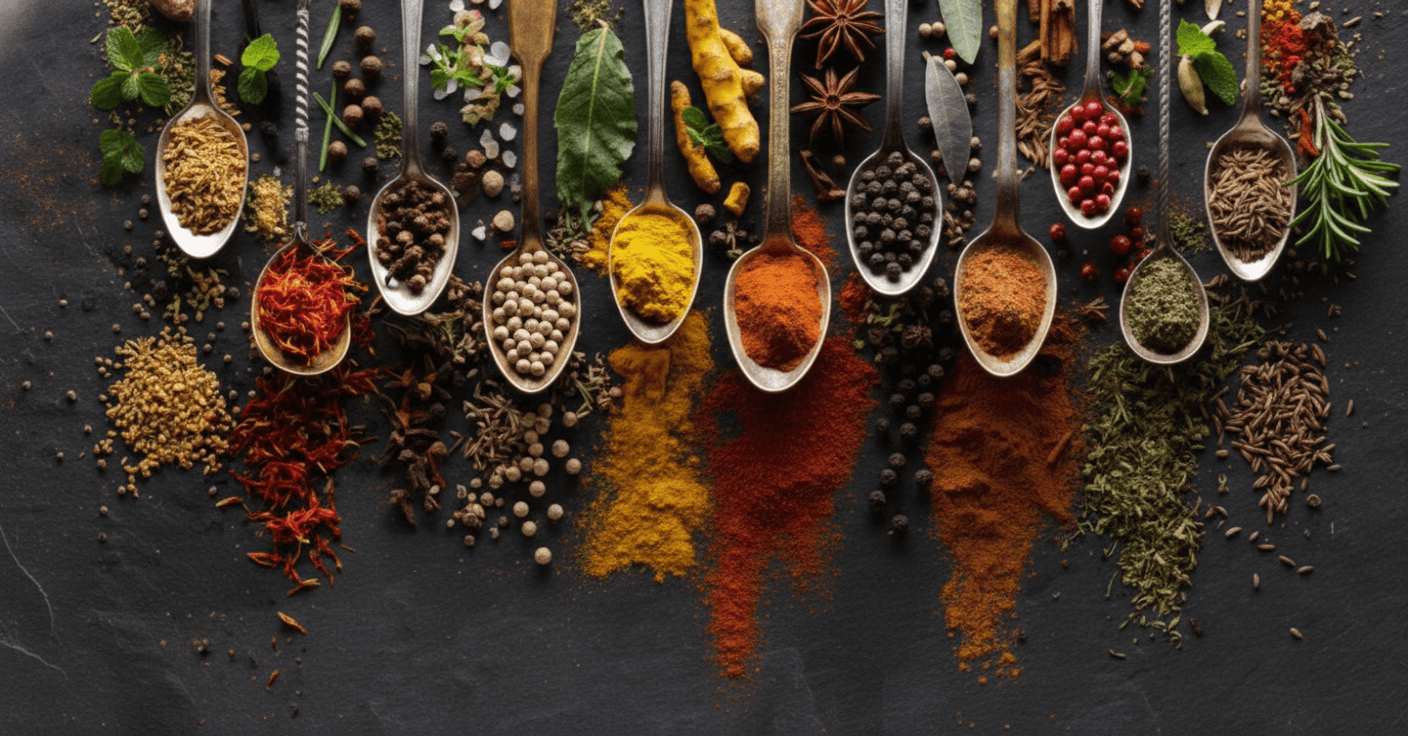
International Trade
Feb 25, 2026•11 min read
The US Spice Import Market: A $466 Million Opportunity Most Buyers Are Underestimating
The US is the world's largest spice importer at $466M. Here's what American importers need to know about sourcing Indian spices in 2025 - tariffs, FDA rules, and demand trends.
US Spice MarketIndian Spice Exports USAFDA Compliance Spices
M
Mayank VermaSpices & Commodities
Feb 22, 2026•9 min read
The Cardamom Boom: A $1.5 Billion Market Hiding in Plain Sight
Cardamom is the world's third most expensive spice and demand is accelerating. Here's what serious spice buyers need to know about the global market in 2025.
Cardamom Market 2025Indian Green CardamomGuatemala Cardamom Supply
A
Adarsh Tripathi
Logistics & Shipping
Feb 21, 2026•8 min read
Which Shipping Line Should You Use When Importing from India?
MSC, Maersk, CMA CGM, Hapag-Lloyd each shipping line has strengths on different India routes. Here's how to pick the right one for your cargo and destination.
India Shipping LinesOcean Freight IndiaFCL Shipments
A
Adarsh TripathiInternational Trade
Feb 19, 2026•7 min read
The US-Canada Trade War: Why Importers Are Turning to India
The US-Canada trade war has fractured a $72B food partnership, sending costs soaring. Here's why smart importers on both sides are pivoting to Indian suppliers.
US Canada Trade WarFood Supply ChainTariffs 2025
A
Adarsh Tripathi
International Trade
Feb 17, 2026•9 min read
The Golden Spice Boom: How Turmeric Became a $10 Billion Global Market
Turmeric market exploding to $10.32B by 2033. Curcumin health benefits, golden milk trend, organic demand. India produces 80%. Complete guide for importers and exporters worldwide.
Turmeric MarketCurcumin BenefitsGolden Milk Trend
A
Adarsh Tripathi
International Trade
Feb 15, 2026•12 min read
Halal Certification 2026: Your Gateway to the $3-12 Trillion Muslim Consumer Market
The Trillion-Dollar Opportunity Most Businesses Are Missing
Halal CertificationHalal Market 2026Muslim Consumer Market
M
Mayank Verma
International Trade
Feb 13, 2026•14 min read
India-Canada Trade Reset: From Diplomatic Crisis to $50 Billion Opportunity
India-Canada relations have flipped from the 2023 diplomatic crisis to a fast-moving 2026 trade reset. CEPA negotiations launch in March 2026, a C$2.8B uranium deal is ready, and both countries are targeting $50B in trade by 2030. Here’s what importers and exporters need to know.
India Canada TradeCEPA NegotiationsMark Carney
A
Adarsh Tripathi
International Trade
Feb 11, 2026•16 min read
The US-China Trade War: How Escalating Tariffs Are Reshaping Global Supply Chains
The Trade War That Changed Everything
US-China Trade WarTariffs 2026Global Supply Chains
A
Ashok Tripathi
International Trade
Feb 10, 2026•14 min read
How the Russia-Ukraine War Reshaped Global Food Supply: What Importers Need to Know
The Conflict That Changed Global Food Markets Forever
Russia Ukraine WarGlobal Food SupplyWheat Exports
P
Prakhar RajInternational Trade
Feb 8, 2026•9 min read
Ramadan 2026 Food Supply Guide Importers:Sourcing for Basmati Rice, Spices & Halal Products
Urgent: Only 2 Weeks Until Ramadan 2026 - GCC Food Importers Emergency Sourcing Guide
Ramadan 2026GCC Food ImportersBasmati Rice
H
Himanshu SharmaInternational Trade
Feb 8, 2026•12 min read
US-India Trade Deal 2026: How American Importers Can Save on Indian Spices, Rice & Food Products
Breaking: Save 32% on Indian Imports as US-India Tariffs Drop to 18%
US-India Trade DealAmerican ImportersTariff Reduction
M
Mayank Verma
International Trade
Feb 4, 2026•16 min read
Complete Guide for European Importers: How to Benefit from the India-EU Free Trade Agreement 2026
European importers guide to the India-EU Free Trade Agreement 2026. Learn how to claim zero tariffs on Indian spices, rice, lentils and processed food imports with step-by-step documentation and savings examples.
India EU FTAEuropean ImportersZero Tariff Imports
H
Himanshu Sharma
International Trade
Feb 3, 2026•15 min read
Complete Guide to Exporting Indian Processed Foods to European Markets in 2026
Step-by-step guide to exporting Indian processed foods to Europe. Learn EU food safety regulations, labeling requirements, market opportunities and India-EU FTA benefits for processed food exporters.
Processed Food ExportEU Food RegulationsIndia EU FTA
R
ReshitInternational Trade
Feb 2, 2026•11 min read
Complete Guide to Exporting Organic Spices to European Markets in 2026
Complete guide to exporting organic spices from India to Netherlands and EU. Learn EU organic certification, regulations, market opportunities and how to succeed in Europe’s €50 billion organic market.
Organic Spices ExportEU Organic CertificationNetherlands Trade
A
Ankur Sharma
International Trade
Jan 14, 2026•15 min read
Leading Indian Spices, Basmati Rice & Lentils Exporter for UAE, Saudi Arabia & GCC
Discover how Indian spices, premium Basmati rice, and quality lentils meet GCC market demands. Learn about certifications, logistics, and why Bayharbor Exports is your trusted partner for authentic Indian products in UAE, Saudi Arabia, and across the Gulf region.
Spices ExportBasmati RiceGCC Markets
A
Adarsh Tripathi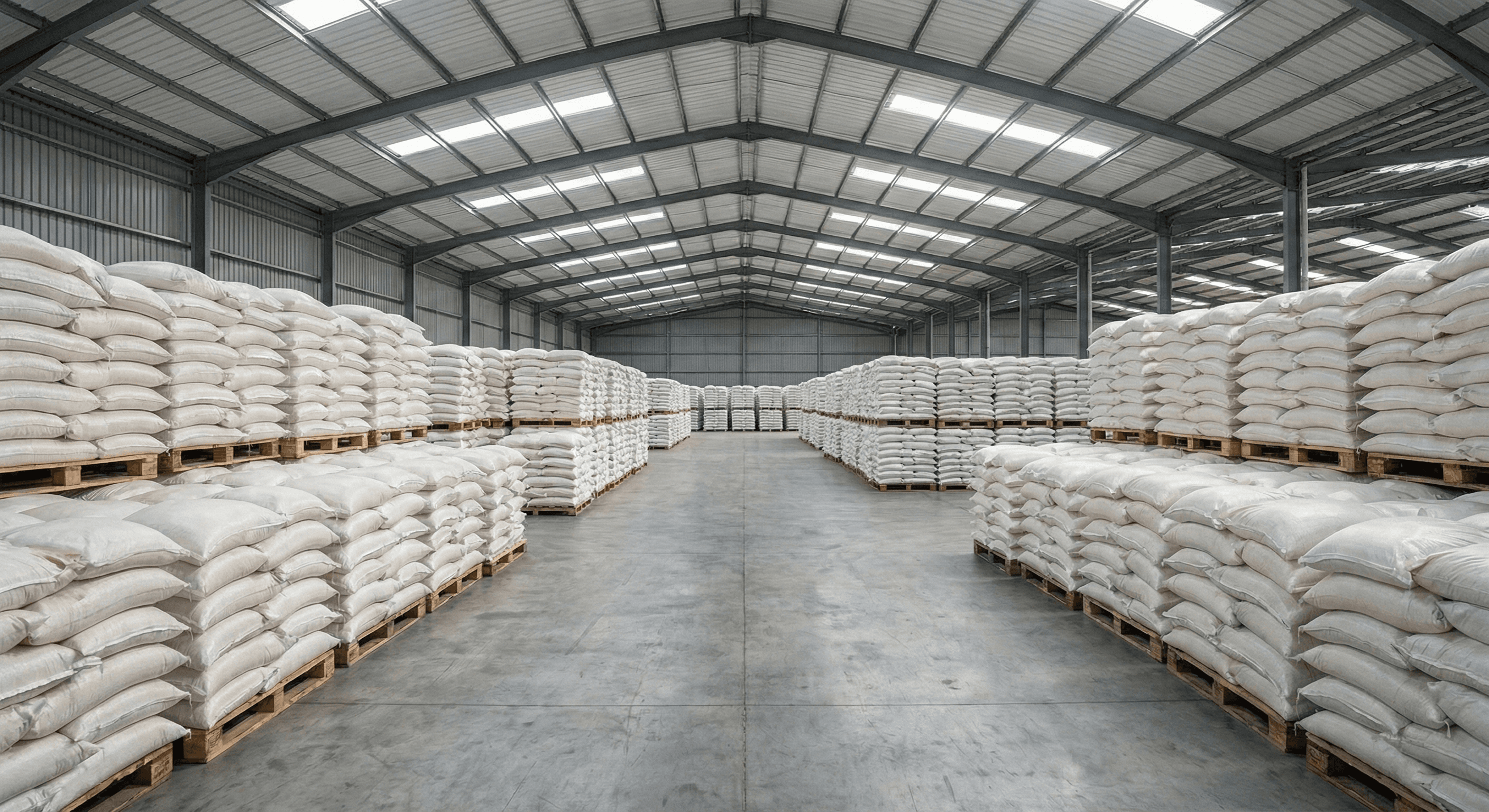
International Trade
Jan 27, 2026•15 min read
5 Profitable Uses of Broken Rice: Animal Feed, Brewing & Beyond (2026 Guide)
Discover the top 5 profitable uses of broken rice in 2026. From animal feed to brewing, learn market demand, pricing, quality specs and find reliable Indian suppliers.
Broken Rice UsesAnimal FeedRice Export
A
Ashutosh Tripathi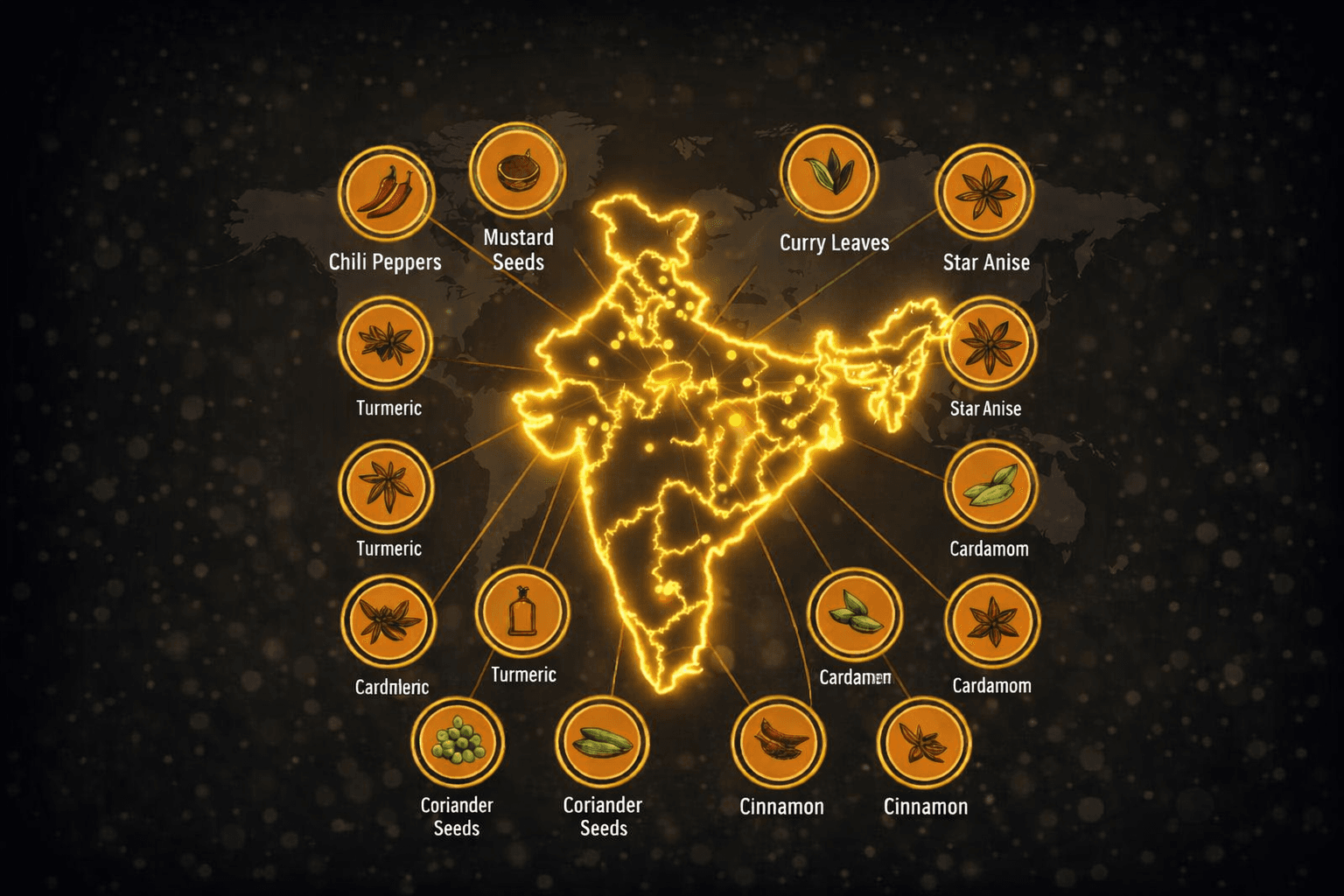
International Trade
Jan 19, 2026•14 min read
Top 15 Verified Spice Suppliers in India: Exporters Directory 2026
Discover 15 verified spice suppliers and exporters in India with certifications, specializations, and export track records. Complete directory for importers seeking premium Indian spices, basmati rice, and lentils in 2026.
Spice ExportersIndian SpicesVerified Suppliers
A
Adarsh Tripathi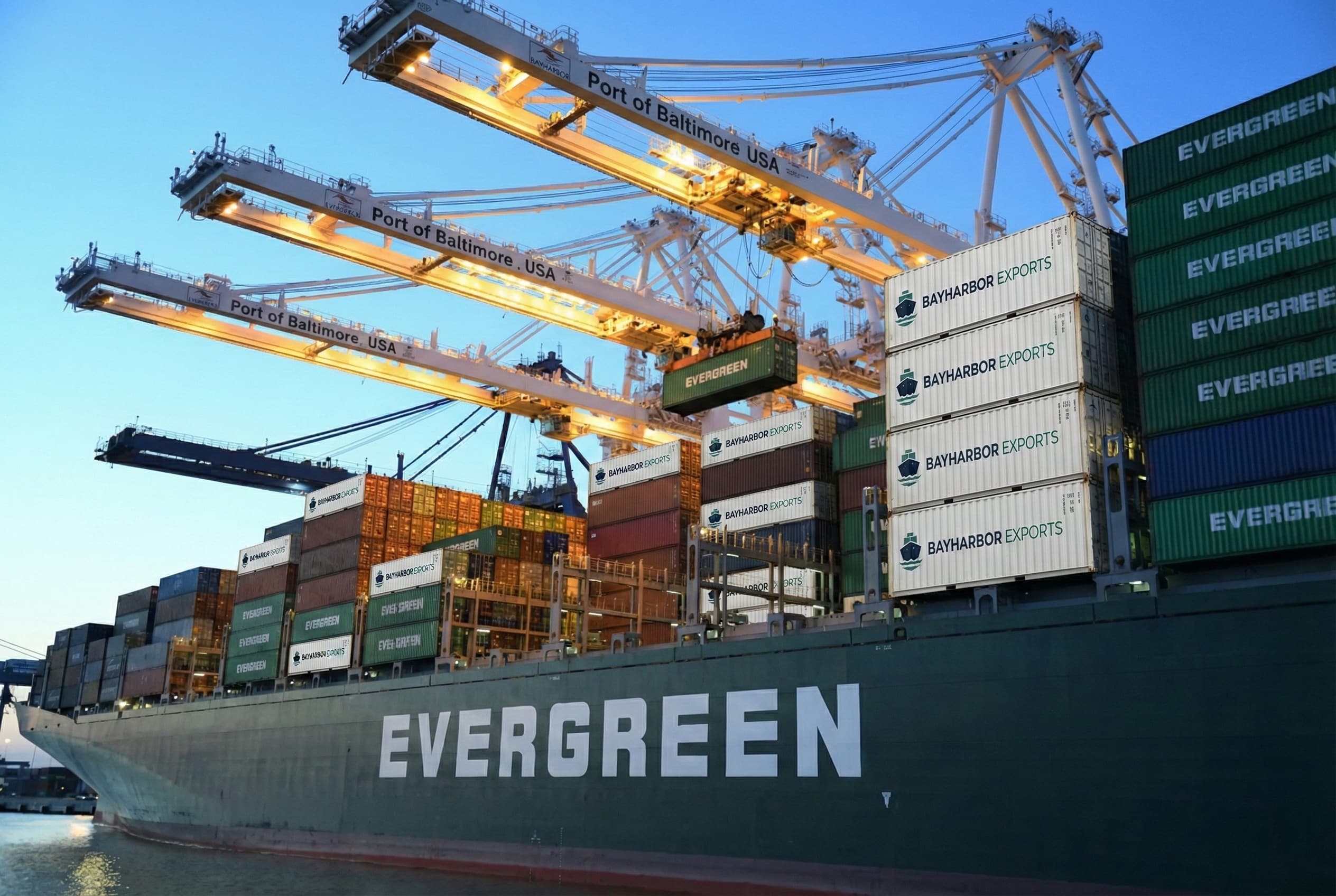
International Trade
Dec 10, 2025•10 min read
Top 10 Products Exported from India
Discover the top 10 most exported products from India, including spices, rice, petroleum, gems & jewelry, pharmaceuticals, textiles, and more. Explore how these exports shape India’s global trade presence.
ExportsIndia TradeTop Products
A
Adarsh Tripathi
Market Trends
Nov 29, 2025•20 min read
Export Market Research: Finding Your Next Big Opportunity
Data-driven strategies to identify profitable export markets, assess competition, understand buyer behavior, and validate demand before investing resources.
Market ResearchStrategyExport Planning
A
Aditi Kulkarni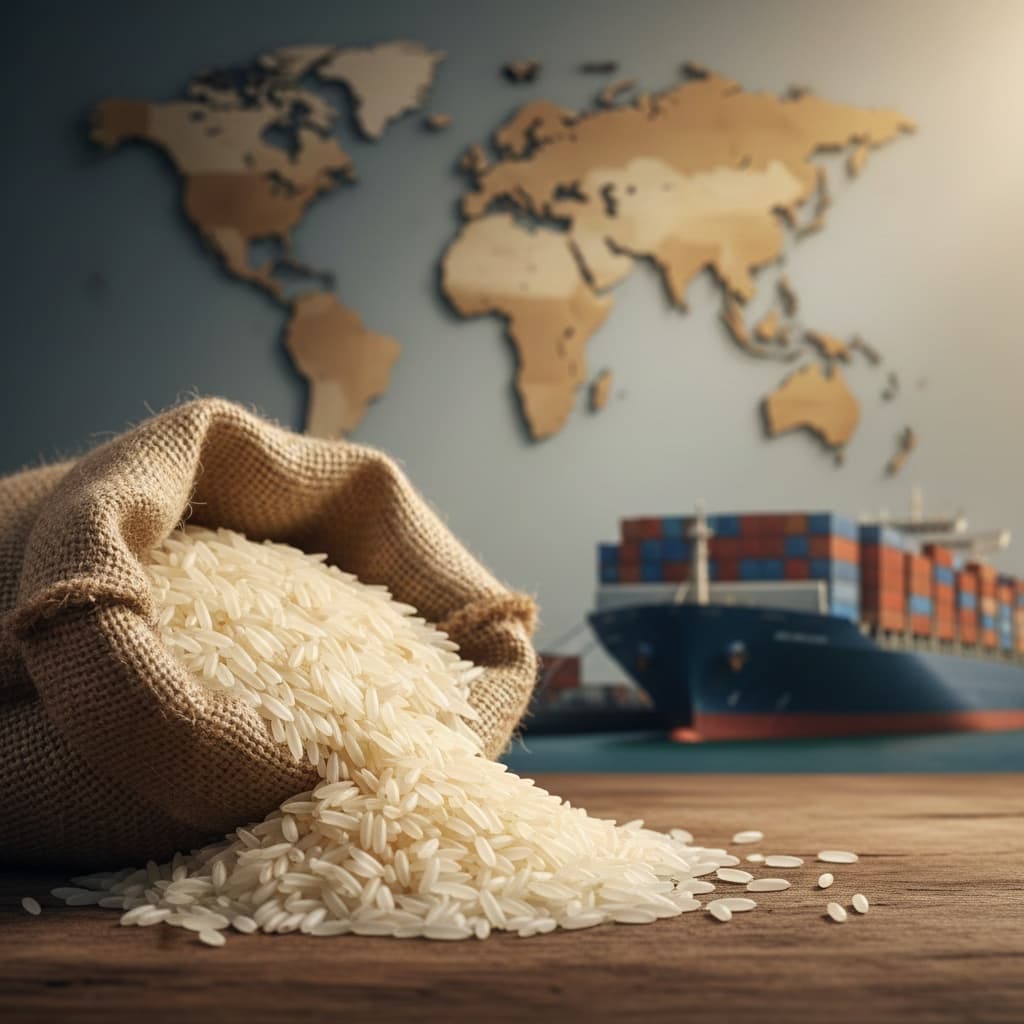
Logistics
Dec 18, 2025•19 min read
How to Export Basmati Rice from India: Complete Guide for Exporters
Learn the complete process of exporting basmati rice from India, including licenses, regulations, documentation, quality control, and shipping methods for successful global trade.
Basmati Rice ExportAgricultural ExportsFCL
M
Mayank Verma
Agricultural Exports
Dec 24, 2025•12 min read
How to Export Spices from India: A Comprehensive Guide
Looking to export spices from India? This comprehensive guide covers sourcing spices, export procedures, licenses, certifications, logistics, and finding international buyers to help you start and scale your spice export business.
Spice Export from IndiaExport SpicesIndian Spices Export
S
Satvik SarthakLogistics
Dec 20, 2025•17 min read
How to Import Spices from India: A Complete Guide
Your step-by-step guide to importing Indian spices, covering supplier selection, documentation, regulations, shipping, and customs clearance to build a successful spice import business.
Spice ImportAgricultural ImportsInternational Trade
A
Aryan Tripathi
Logistics
Dec 24, 2025•14 min read
How to Find Reliable Product Sourcing Agents in India
Discover how to find reliable product sourcing agents in India. Know key considerations, tips, and strategies for selecting the right sourcing agent to ensure product quality, cost-effectiveness, and smooth logistics.
Product SourcingInternational TradeSupplier Management
J
John Hugh
Agriculture
Jan 7, 2026•7 min read
Top Agricultural Product Exports from India: Key Exports & Market Insights
Explore the leading agricultural products exported from India, including rice, spices, tea, and pulses. Gain valuable insights into India's agricultural export revenue, key markets, and industry trends to leverage the growing demand for India agriculture exports.
Agricultural ExportsIndia ExportsGlobal Trade
A
Adarsh TripathiInternational Trade
Jan 9, 2026•8 min read
Saudi Arabia Trade Benefits in Strengthening International Partnerships
Saudi Arabia Trade Benefits in Strengthening International Partnerships
Saudi Arabia TradeInternational PartnershipsGlobal Trade
M
Mayank Verma