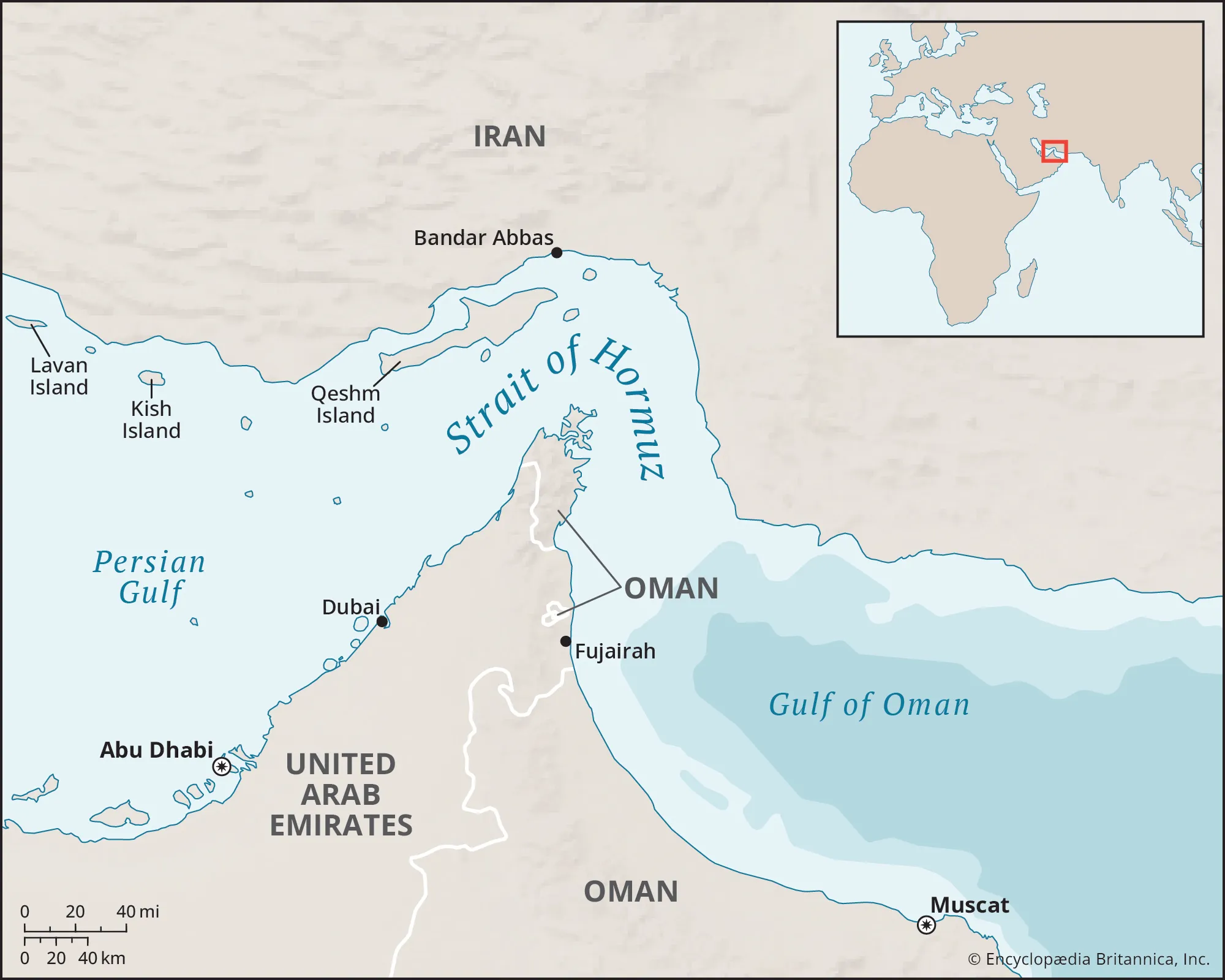
The Strait of Hormuz crisis has shut down one of the world's most critical trade routes. Here's what European food importers must understand about costs, logistics, and supply risks right now.
The Strait of Hormuz Crisis: What European Food Importers Must Know Right Now
The Strait of Hormuz has been effectively closed since March 4. A US blockade started April 13. Brent is above $90, European gas has nearly doubled, and the IEA calls it the greatest energy security threat in history. Here is what European importers need to do now. The Strait of Hormuz has been effectively closed to commercial shipping since March 4, 2026. A two-week ceasefire between the US and Iran agreed on April 7 produced no meaningful resumption of traffic - by April 9, the Abu Dhabi National Oil Company CEO confirmed the strait was still not open, with 230 loaded oil tankers waiting inside the Gulf. Then on April 13, President Trump announced a full US naval blockade of Iranian ports, adding a second layer of closure on top of Iran's own restrictions. As of April 17, only a handful of vessels linked to exempted nations are transiting the waterway. Commercial shipping remains effectively halted.The IEA's Executive Director has described the combined impacts as "the greatest threat to global energy security in history." Brent crude has surged past $90 per barrel. The EU estimates gas prices have risen 70% and oil by 50% since the conflict began, generating an extra €13 billion bill on European fossil fuel imports. Dutch TTF gas benchmarks have nearly doubled to over €60/MWh. And Europe entered this crisis with gas storage at just 30% capacity - 46 billion cubic metres at end of February 2026, compared to 60 bcm in 2025 and 77 bcm in 2024.
For European food importers, the Strait of Hormuz crisis is not primarily an energy story. It is a landed cost story, a logistics story, a fertilizer story, and a supply chain resilience story - all hitting simultaneously. This blog explains what is actually happening, why Europe is specifically exposed, and what procurement teams should be doing today.
What Has Actually Happened | A Clear Timeline
The sequence of events matters for understanding where we are now and what comes next.
February 28
US and Israeli forces launched coordinated airstrikes on Iran under Operation Epic Fury, targeting military, nuclear, and leadership infrastructure. Iran's Supreme Leader Ali Khamenei was killed. Iranian forces retaliated with missile barrages on Israeli cities, US bases in the Gulf, and Gulf state infrastructure including facilities in the UAE, Qatar, and Bahrain.
March 2-4
All major shipping lines - MSC, Maersk, CMA CGM, Hapag-Lloyd - suspended Gulf operations. MSC declared End of Voyage for Gulf-bound cargo. P&I insurance war-risk cover was withdrawn effective March 5, making commercial transit economically and legally untenable. The IRGC formally confirmed the Strait was closed on March 2 and launched 21 confirmed attacks on merchant ships over the following weeks.
March 3
QatarEnergy declared force majeure on all LNG export contracts after Iranian drone attacks damaged the Ras Laffan facility, the world's largest LNG liquefaction plant. Restarting it, QatarEnergy warned, will take weeks; full rebuilding of damaged sections could take up to five years.
March 26
Iran announced exemptions for vessels owned by China, Russia, India, Iraq, and Pakistan. Malaysia, Thailand, and the Philippines subsequently negotiated limited transit rights. The UN secured agreement for humanitarian and fertilizer shipments. This created a partial, highly conditional resumption for certain origins - notably not including European-flagged or European-owned vessels.
April 7
A US-Iran ceasefire was agreed in Islamabad negotiations brokered by Pakistan. Markets briefly recovered.
April 9
The ceasefire produced no actual resumption of commercial traffic. The ADNOC CEO confirmed the strait remained blocked, with Iran conditioning and restricting transit. 230 loaded oil tankers remained anchored inside the Gulf.
April 13
President Trump announced a full US naval blockade of Iranian ports. CENTCOM confirmed the blockade fully implemented within 24 hours, with 10 merchant vessels turned back in the first 48 hours. The blockade applies to vessels entering or exiting Iranian ports - non-Iranian port traffic is theoretically free to transit, but the practical effect on commercial confidence has been a further collapse in transits to near zero.
April 17 (today)
Six to nine vessels are transiting daily, most linked to exempted nations or carrying sanctioned cargo. Normal pre-war traffic was approximately 170 to 200 vessels per day. The Strait of Hormuz shipping blockade remains in force on both sides simultaneously.
Why Europe Is Specifically Vulnerable
Europe is not the world's most exposed region to Hormuz disruption - Asia, which receives 84% of Gulf crude and 83% of Gulf LNG, faces the most acute direct energy shortage. But Europe's specific vulnerabilities are structural in ways that make the medium-term impact potentially more severe than the headline numbers suggest.
LNG exposure at the worst possible moment. Europe gets 12% to 14% of its LNG from Qatar through the Strait. That sounds manageable until you consider the timing: Europe entered this crisis with gas storage at just 30% capacity following a harsh winter - nearly half the level of two years prior. The summer refill season, which normally runs April through October, is the annual window during which Europe replenishes storage for the following winter. With Qatari LNG off the market and summer refill under severe pressure, the ECB has already postponed its planned interest rate reductions, raised its 2026 inflation forecast, and cut GDP growth projections. UK inflation is expected to breach 5% in 2026. Economists are warning that energy-intensive European economies face high risks of technical recession if the Strait of Hormuz maritime blockade persists through the summer.
Industrial energy costs. The EU estimates a €13 billion additional annual bill on fossil fuel imports. Dutch TTF gas benchmarks doubled to over €60/MWh. Chemical and steel manufacturers across the EU and UK have imposed surcharges of up to 30% to offset surging electricity costs. For food manufacturers sourcing from European processors - companies that use energy-intensive drying, freezing, or packaging operations - these surcharges are already appearing in supplier invoices.
Fertilizer. This is the impact that European food importers are least focused on but should be most concerned about. The Gulf region accounts for 30% to 35% of global urea exports and 20% to 30% of ammonia exports. Up to 30% of internationally traded fertilizers normally transit the Strait of Hormuz. Since the conflict began, urea prices have increased 50% as of late March 2026. The UN secured agreement for humanitarian and fertilizer shipments through the Strait on March 27 - but implementation remains inconsistent. For European food importers, rising fertilizer costs will feed through to the price of spices, grains, lentils, and other agricultural products grown in developing countries that depend on nitrogen fertilizer over the next one to two growing seasons.
Jet fuel and air freight. European airports have begun imposing jet fuel restrictions. Italian airports in Bologna, Milan, Treviso, and Venice restricted refueling services in early April. Ryanair CEO Michael O'Leary predicted summer flight cancellations of 5% to 10% if the Strait remains closed. Jet fuel averaged $195 per barrel in the first week of April - more than double the prior year's average. For European importers who use air freight for urgent food shipments, high-value spices, or perishable products, the air freight cost environment has materially deteriorated.
Cape of Good Hope rerouting penalties. All European-origin and Europe-bound shipping from India and Asia is now routing around the Cape of Good Hope. This adds 7 to 14 days to standard transit times and has generated a layer of surcharges - Bunker Adjustment Factor increases, Peak Season Surcharges, and War Risk Surcharges - that are compounding on top of base freight rates. European importers' supply chain costs are rising on every cost line simultaneously.
The Partial Exemption Picture | What It Means for Your Sourcing
Iran's decision to grant transit rights to vessels from China, Russia, India, Iraq, Pakistan, Malaysia, Thailand, and the Philippines has created a two-tier shipping environment that directly affects where European buyers should be sourcing from.
Indian-flagged and Indian-owned vessels were explicitly granted Strait transit rights by Iran on March 26. This means that Indian exporters shipping through their own logistics networks or on vessels with Indian ownership have access to Gulf routing that European-flagged vessels do not. India Strait of Hormuz exemption is not a blanket solution for European buyers - the cargo still needs to reach European ports, which continues via Cape of Good Hope routing for the European leg. But it does mean that India-origin supply chains have materially less disruption on the origin-country end than supply chains originating in countries without exemptions.
For European food importers, this is a concrete sourcing advantage. A buyer sourcing spices, lentils, or basmati rice from India through an Indian exporter using Indian-flagged vessels for the Gulf-side leg faces fewer transit complications than a buyer sourcing from Gulf-origin suppliers whose entire export route is blocked.
What This Means for Food Prices and Supply in Europe
The European food supply chain disruption from the Strait of Hormuz crisis is playing out across three timeframes.
Immediately - logistics costs are up on all India and Asia-to-Europe lanes. War risk surcharges, longer routings, and higher bunker fuel costs are already reflected in freight invoices. European importers who have not renegotiated their supply contracts to account for these surcharges are absorbing costs that weren't in their original landed cost models.
Over the next three to six months - fertilizer cost increases will feed through to agricultural commodity prices. Spice crops, lentils, and grains grown in India, Vietnam, and other developing country origins all depend on nitrogen fertilizer. Urea prices up 50% since the conflict began represent an input cost increase that exporters will pass through to importers over the course of the current and next growing season.
Over the next 6 to 18 months - if Ras Laffan remains offline and European gas storage cannot be adequately refilled over summer, Europe faces the prospect of a second energy crisis comparable to 2022. The British Food Policy Institute has warned of long-term increases in food prices due to sustained disruption in fuel and fertilizer markets. For European food manufacturers and their import-dependent supply chains, this is a scenario that needs to be in procurement planning now.
What European Food Importers Should Do Right Now
Audit your shipping cost exposure. Pull every active freight invoice from March 2026 onward and identify all surcharges applied since the conflict began. War risk surcharges, emergency conflict surcharges, BAF increases, and peak season premiums may all have been applied - some without prior notice under force majeure clauses. Understand what you are paying and why before your next contract renewal.
Recalculate your landed costs. Brent above $90, TTF above €60/MWh, and Cape of Good Hope routing all feed into landed costs that were modeled under a different freight environment. Every landed cost calculation done before February 28, 2026 is outdated.
Extend your inventory buffers. The standard 30-day stock buffer assumes predictable transit times. Cape of Good Hope rerouting adds 7 to 14 days. Port congestion at alternative hubs adds further variability. For critical input categories - spices, lentils, rice - move to a minimum 45 to 60-day buffer until the Strait situation resolves.
Prioritise India-origin supply. India has Strait transit exemptions, operational ports, a 6.2% GDP growth trajectory, zero-tariff access to the UK under the CETA entering into force this month, and improving tariff access to the EU under the January 2026 FTA. For European food importers looking to reduce Gulf-corridor supply chain exposure while maintaining quality and pricing, India is the most logical immediate alternative.
Confirm force majeure and insurance positions. If your supplier has declared force majeure, understand what that means for your specific shipment obligations, delivery timelines, and pricing clauses. Confirm with your insurance broker that your marine cargo policy covers war risk events - standard policies often require a specific endorsement that many importers have not checked since the Red Sea crisis of 2023-2024.