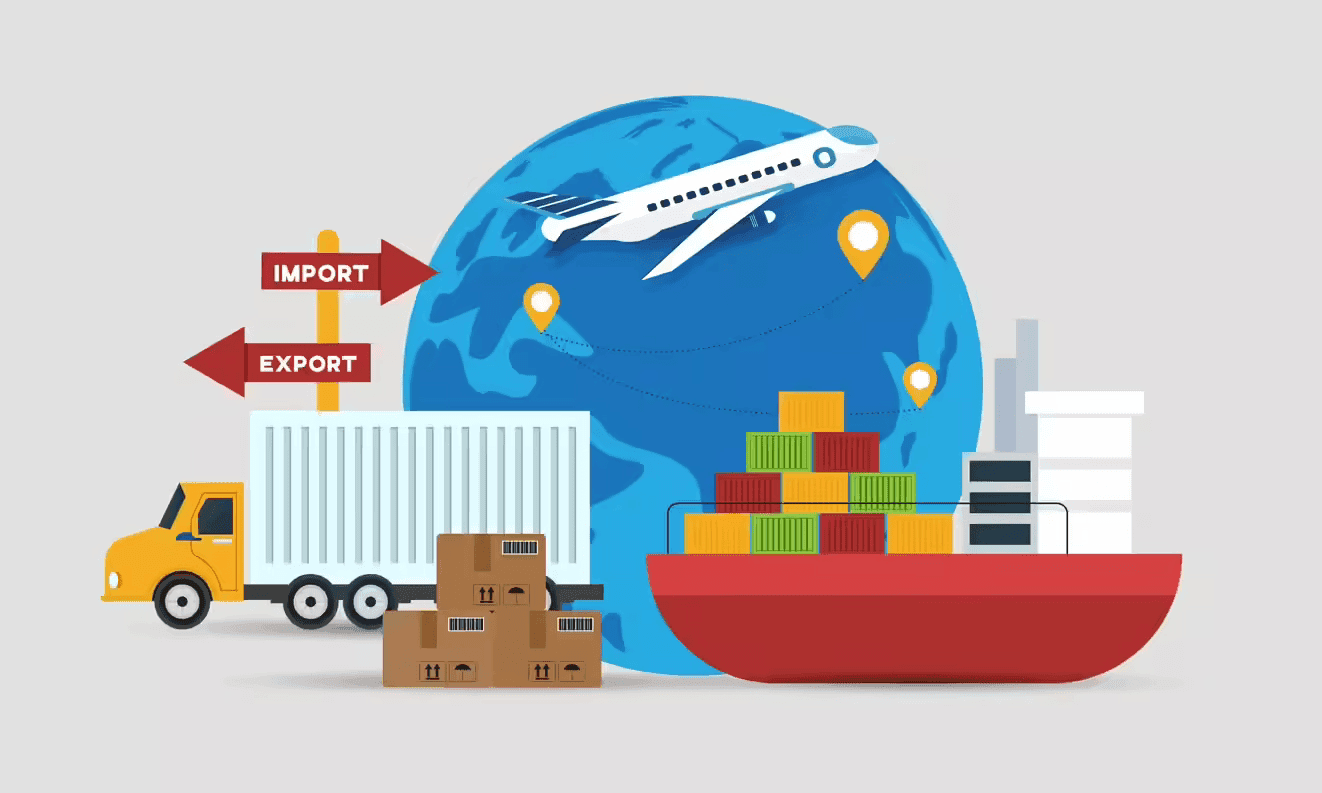
Resilience is the defining trade strategy of 2026. Learn how exporters are adapting to tariffs, disruptions, and global uncertainty to build stronger international businesses.
The word most frequently used by global trade analysts in 2026 is “resilience.” After years of pandemic shocks, escalating tariff wars, geopolitical fractures, and now active conflict disrupting key shipping routes, the businesses that are thriving are not those that predicted every change — they are the ones that built supply chains and export strategies designed to flex, pivot, and adapt. At Bay Harbor Exports, resilience is not a buzzword. It is the foundation of every trade strategy we develop for our clients. In this blog, we break down the key forces reshaping global supply chains in 2026, what proactive exporters are doing differently, and how your business can position itself for sustainable international growth.
Why Supply Chain Resilience Has Become the #1 Trade Priority
The World Economic Forum’s Global Value Chains Outlook 2026 delivers a striking finding: nearly three in four global business leaders now prioritize resilience investments, with 74% viewing resilience as a driver of growth rather than merely a cost. This is a profound shift. For most of the past three decades, global supply chains were engineered for maximum efficiency — lean inventories, single-source suppliers, just-in-time delivery. The logic was sound as long as conditions were stable.
They are no longer stable.
More than 3,000 new trade and industrial policy measures were introduced globally in 2025 — more than three times the annual level recorded just ten years ago. Energy price shocks, military conflicts in key trade corridors, and rapidly shifting tariff regimes have exposed the fragility of efficiency-first supply chains. The WTO’s latest Global Trade Outlook describes the current period as the worst trade disruption in 80 years.
For exporters, the lesson is clear: the companies gaining market share in 2026 are those that have deliberately built redundancy, diversification, and flexibility into their international trade operations.
The Tariff Maze: How to Navigate Rising Protectionism
One of the most immediate challenges facing exporters in 2026 is the explosion of tariff complexity. Governments worldwide have increasingly turned to tariffs as tools of industrial policy, national security strategy, and geopolitical leverage. The United States, in particular, has been at the center of this trend. Following a landmark U.S. Supreme Court ruling that found the previous administration’s use of emergency powers for broad tariff imposition exceeded statutory authority, the U.S. swiftly moved to a 10% global tariff on all imports under Section 122 of the Trade Act of 1974. This tariff is limited to 150 days unless extended by Congress — meaning significant policy uncertainty persists through mid-2026. Additionally, new Section 232 proclamations issued on April 2, 2026, tightened tariffs on aluminum, steel, and copper imports on national security grounds. For any exporter whose supply chain touches these materials — whether as a finished product, component, or packaging — this has direct cost implications. The smart response is not to wait and see. Exporters who are working proactively with trade compliance specialists are reclassifying products, exploring duty drawback opportunities, identifying tariff-exempt country-of-origin strategies, and building flexibility into supplier contracts. Bay Harbor Exports helps clients map their full tariff exposure and develop strategies that protect margins without sacrificing market reach.
Diversifying Markets: The Case for South-South Trade
One of the most important and underappreciated shifts in global trade is the dramatic growth of trade between developing economies — what economists call South-South trade. This category of commerce has grown from approximately $500 billion in 1995 to $6.8 trillion in 2025, now accounting for more than a quarter of all global trade.
For exporters who have historically focused on the United States or European Union as their primary markets, this represents a massive and relatively underexplored opportunity. Markets across Asia, Africa, and South America are forecast to register the fastest merchandise import growth in 2026 — outpacing North America and Europe by a significant margin.
The India-EU free trade agreement, signed at the end of January 2026, is accelerating this shift further. By creating a seamless trade corridor between the world’s two largest democratic markets — covering two billion people and nearly 25% of global GDP — the deal is reorienting supply chain logic in sectors from pharmaceuticals and textiles to engineering and digital services.
Bay Harbor Exports has deep expertise in South-South and South-North trade corridors. We help clients identify which emerging markets align with their product offerings, navigate local regulatory requirements, build distribution partnerships, and manage the logistics of reaching buyers in markets that may be unfamiliar but are increasingly lucrative.
Digital Trade and the New Economy
Beyond physical goods, digital trade is one of the fastest-growing components of the global economy. Commercial services trade — which includes digital services, financial services, and business process outsourcing — is projected to grow at 4.8% in 2026, outpacing merchandise trade growth by a significant margin.
The global surge in AI-enabling products that powered 2025’s record trade volumes is continuing to reshape what countries buy and sell. Nations with strong digital infrastructure and skilled workforces are building new comparative advantages, while those dependent on commodity exports face growing pressure to diversify.
For businesses involved in digital services exports, intellectual property licensing, or technology-enabled trade, 2026 offers enormous potential — but also new regulatory complexity. Countries are increasingly imposing data localization requirements, digital services taxes, and technology transfer conditions as part of their industrial policies. Understanding these rules market by market is essential.
At Bay Harbor Exports, we support clients navigating both the physical and digital dimensions of international trade, ensuring that your export strategy is fit for a world where goods and services increasingly travel together.
Green Trade Compliance: A New Cost of Doing Business in Europe
If you export to the European Union or plan to in the future, the EU Carbon Border Adjustment Mechanism (CBAM) is now a front-line compliance issue. Effective from 2026, the mechanism imposes a carbon cost on imports in regulated sectors including steel, aluminum, cement, fertilizers, and electricity, based on the carbon emissions embedded in their production.
Exporters who have not yet assessed their CBAM exposure risk both financial penalties and reputational damage in a European market that increasingly values sustainability credentials. The transition period, during which only reporting was required, has ended — now financial obligations apply.
Beyond compliance, there is a strategic opportunity here. European buyers are actively seeking suppliers who can demonstrate low-carbon production. Exporters who invest in cleaner manufacturing processes and can credibly document their carbon footprint will find themselves at a competitive advantage in European procurement processes.
The green transition is also driving explosive growth in clean energy technology trade. Markets for solar panels, battery systems, wind turbines, and energy storage are forecast to reach $640 billion annually by 2030. Countries and companies that position themselves as suppliers of clean technology are building long-term trade relationships that will outlast current tariff and geopolitical cycles.
Bay Harbor Exports helps clients conduct carbon footprint assessments for CBAM purposes, develop sustainability documentation for European buyers, and identify opportunities in the fast-growing clean energy export market.
Freight and Logistics in 2026: Planning for Disruption
The physical movement of goods has never been more complex. The Middle East conflict has disrupted one of the world’s most important shipping corridors, with vessels diverting around the Cape of Good Hope and adding days or weeks to transit times between Asia and Europe. Oil price volatility is driving fuel surcharges across freight modes. Port congestion at alternative hubs is creating bottlenecks.
Against this backdrop, the exporters and importers faring best are those who have made several key adaptations. First, they have diversified their carrier relationships rather than relying on a single logistics provider. Second, they have built inventory buffers at strategic points along their supply chains. Third, they have invested in real-time cargo visibility technology that allows them to respond to disruptions rather than simply absorb them. Fourth, they have reviewed their contracts carefully to ensure that force majeure clauses, price adjustment mechanisms, and delivery timeline flexibilities are clearly defined.
Bay Harbor Exports manages freight and logistics as an integrated part of our clients’ trade strategies — not as an afterthought. Our team works with a network of global freight partners and applies decades of routing expertise to find the most reliable and cost-effective paths for your cargo.
Building Your Export Strategy for 2026 and Beyond
The businesses that will capture the greatest international trade opportunities over the next three to five years share several characteristics. They treat compliance not as a burden but as a competitive differentiator. They have mapped their supply chains beyond tier-one suppliers to understand where vulnerabilities exist. They diversify across markets, carriers, and suppliers so that no single disruption is catastrophic. They invest in relationships — with buyers, logistics partners, and trade experts — that provide intelligence and access when conditions change. Bay Harbor Exports was built to be that partner. We combine deep regulatory expertise, extensive logistics networks, and genuine market knowledge to help businesses of all sizes compete and grow in international markets. Whether you are a seasoned exporter looking to optimize your strategy, or a growing business taking your first steps into global trade, we have the experience and relationships to make it happen.Frequently Asked Questions (FAQ)
What does Bay Harbor Exports do differently from a standard freight forwarder?
We currently only export to the U.S. and EU. How should we think about market diversification?
How does Bay Harbor Exports help with EU CBAM compliance?
Our logistics costs have increased significantly due to Middle East disruptions. What can Bay Harbor Exports do to help?
What industries does Bay Harbor Exports specialize in?
How do I start working with Bay Harbor Exports?
Bay Harbor Exports is your trusted partner in international trade.
From strategy to compliance to logistics, we help businesses grow beyond borders with confidence. © 2026 Bay Harbor Exports. All rights reserved.